BLE Reliability & Connectivity Engineering
You have a device and need a companion app. Or an app with a BLE problem your logs can't explain. Since 2017, we've integrated 20+ connected devices across e-mobility, fitness, and IoT, and learned that unresolved connectivity issues don't stay quiet. They end up in your app store reviews and undermine trust in your device.
Contact us
You Need a BLE Engineering Partner If...
1
You're launching a connected product
You have hardware and need a companion app, or your OEM app doesn’t have a premium feel. You need a mobile team that understands the device side, not just the UI layer.
2
You're experiencing BLE issues in the field
Users report dropped connections, slow pairing, or OTA update failures. The problem exists, but your engineers can't explain it. You need diagnosis before you can fix.
3
You're scaling to a new hardware generation
A new device model or firmware version needs to coexist with your current app and not disrupt existing users or split the codebase.
4
Your hardware vendor's documentation is incomplete or wrong
The protocol spec is missing commands, has incorrect byte order, or simply doesn't match what the firmware actually does. You need a development partner who can reverse-engineer the protocol and find out what's really happening.
Our BLE Connectivity Services
- Architecture & Consulting
- Mobile BLE Integration
- Interoperability Support
- OTA Firmware Updates
- Reliability Testing & Troubleshooting
- Performance & Security Optimization


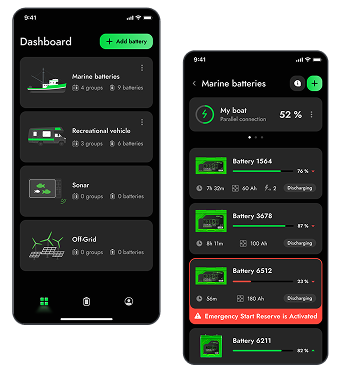
Norsk Guardian (image by Stormotion)
BLE Architecture & Consulting
We design the mobile BLE layer before a single line of code is written. It includes connection lifecycle, pairing flow, error handling, and the abstraction interface that keeps the rest of your app clean.
GATT profile analysis and service/characteristic mapping
Flagging firmware gaps
Tech stack recommendation


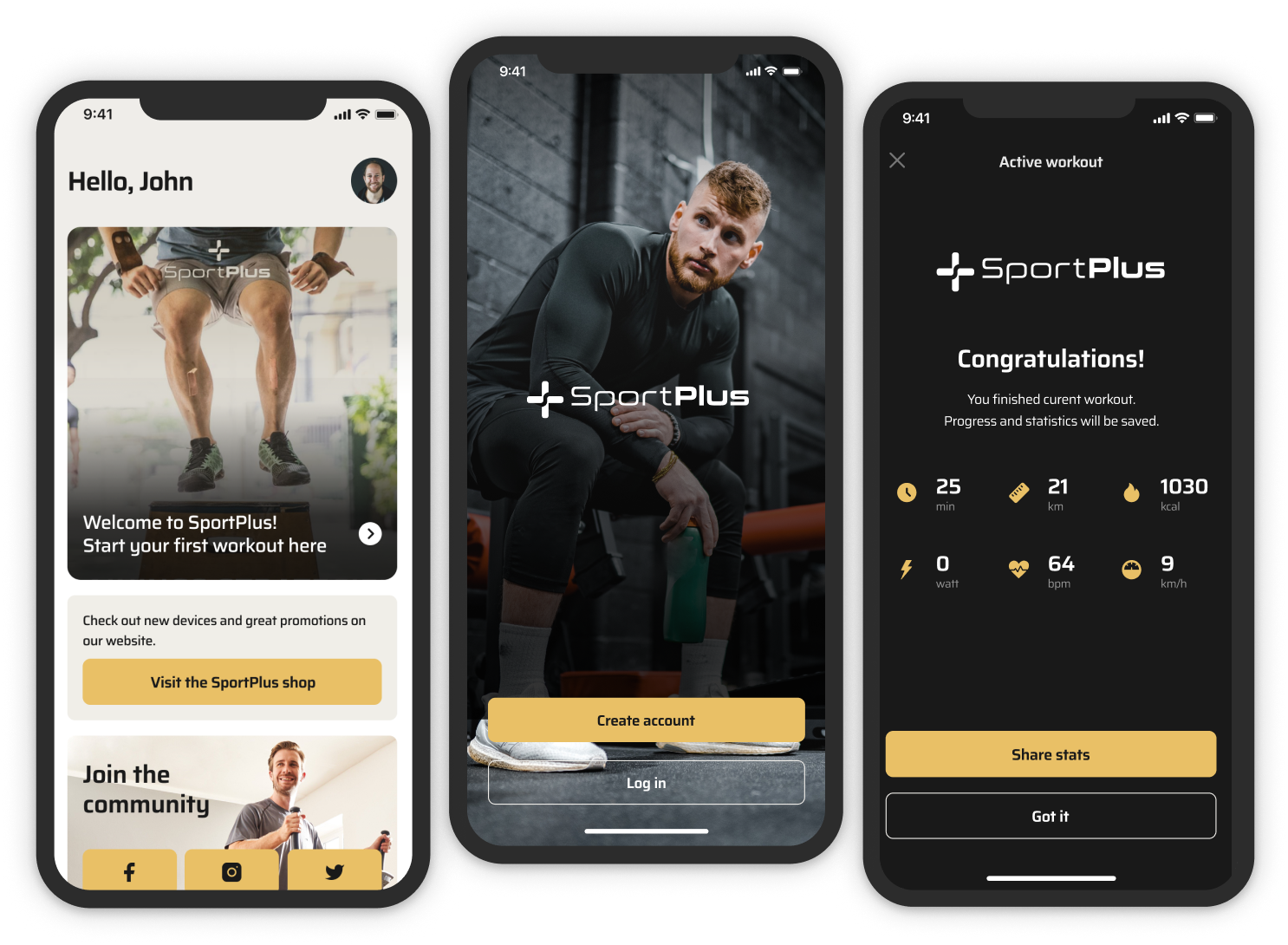
SportPlus (image by Stormotion)
Mobile BLE Integration – iOS, Android & React Native
We implement the BLE communication layer on both platforms. Where cross-platform libraries introduce timing issues or reliability gaps – most visibly during OTA updates – we build native iOS and Android modules and expose them to React Native. It enables keeping the UI cross-platform and the Bluetooth logic at the OS level.
iOS integration via CoreBluetooth (Swift / Objective-C)
Android integration via BLE API (Kotlin / Java)
Native module development for React Native projects
Reconnection logic, background sync, and GATT notification handling

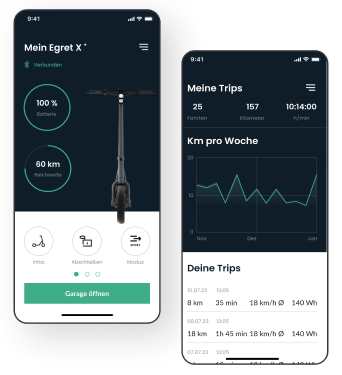
Egret (image by Stormotion)
Multi-Protocol & Interoperability Support
When a product line grows – new device generations, new suppliers – the app must speak multiple protocols. We build the abstraction layer that normalises communication across device variants. This way, new hardware is added as a protocol adapter, not a new code path through the entire application.
Protocol abstraction layer design and implementation
Support for multiple device models in a single app
Cross-vendor BLE compatibility


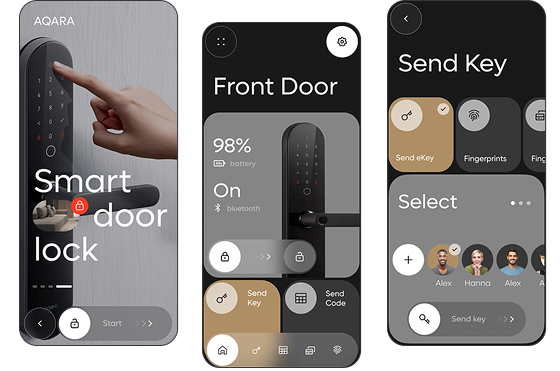
design by @Jack R.
OTA Firmware Updates Over BLE
Pushing firmware over BLE is technically demanding. Chunk sizing, sequence control, timeout handling, and mid-transfer recovery require careful implementation. We rebuild OTA update pipelines where standard solutions fail. It happens because the device runs out of time waiting for the next data chunk, or because iOS and Android handle the transfer differently.
Chunk-based transfer with pacing and timeout management
Cross-platform consistency between Android and iOS OTA flows
Recovery logic for interrupted transfers

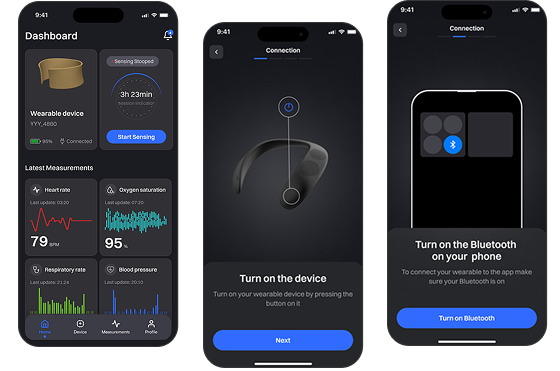
design by @Equal
Reliability Testing & Troubleshooting
When BLE issues only appear in the field – wrong data from a specific firmware build, discovery failures in high-interference environments, pairing that breaks on one platform – mobile logs alone are rarely enough. We use hardware-level packet sniffing to capture raw radio traffic and find what the SDK will never surface.
Hardware-level BLE packet capture (nRF52840 + Wireshark)
Protocol reverse engineering when vendor documentation fails
Root cause identification and vendor feedback reports


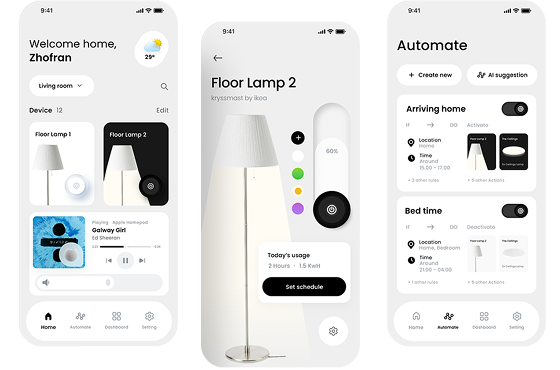
design by @Zhofran Ardyan
Performance, Power & Security Optimization
We optimise the BLE layer across three dimensions: scan mode selection to reduce battery drain, GATT notification subscriptions to eliminate polling, and app-level access control layered on top of device pairing to ensure only authorised users can issue commands.
Scan mode tuning for battery vs. discovery speed trade-off
Notification-based data sync to replace polling
Application-level authentication and session control
BLE Technical Challenges We Solve
BLE issues rarely appear where you first expect them. The most challenging problems are often not in the mobile application code, but in device firmware or unreliable documentation. At times, reverse engineering is required just to determine why a device behaves differently than expected.


BLE Security That Only Looks Secure
If your device pairs over BLE, there's a good chance anyone within radio range can connect and issue commands – without your app, without your credentials, and without triggering any error. We've found exploitable gaps in products that had already passed internal QA. We identify exactly where your access control breaks down and add application-level authentication on top so only authorised users can operate the device.
Pairing & Reconnection Instability
Pairing fails silently, returns the wrong error, or behaves differently depending on who initiates it. On Android we handle the bonding handshake directly; on iOS we design around CoreBluetooth's system-level flow. Either way, we make sure the user always knows what's happening and why.
Dropped Sessions & Inconsistent Data Transfer
Some device models send duplicate data bytes, shift values to wrong positions, or drop the connection under specific conditions. We collect enough real traffic samples to identify the pattern, then handle it in the mobile layer without waiting for a firmware fix.
Hard-to-Reproduce Field Issues
When a bug only appears in the field, we use an nRF52840 sniffer with Wireshark to capture raw radio packets. It helps us reveal advertising format errors, undocumented command sequences, and byte-order mismatches.
Undocumented or Incorrect Protocol
Vendor documentation is often incomplete, outdated, or simply wrong. We've found reversed byte order, missing command sequences, and protocol version drift by reverse-engineering the vendor's own reference app when the spec ran out.
OTA Firmware Updates Failing or Timing Out
BLE throughput is low and device-side inactivity timers are unforgiving. A large firmware image chunked into small packets can easily exceed a 5-minute device timeout, especially when the transfer cadence is inconsistent. We've rebuilt OTA pipelines from scratch, cutting per-chunk latency from 120ms to 50ms and completing transfers that were previously impossible.
High Battery Consumption
Aggressive BLE scanning is the biggest mobile-side drain. We select scan mode based on context – high-power only during active search, duty-cycled for background reconnection. We also replace polling with GATT notifications wherever the device supports it.
Cross-Platform Inconsistencies
The same device can pair on iOS and fail silently on Android or vice versa. The root cause is almost always in the pairing layer, where each OS behaves fundamentally differently. We maintain separate platform-specific bonding logic behind a single interface.
Our Recent Projects
Testimonials
Technologies
All
Native iOS
Native Android
Cross-platform React Native

Core Bluetooth

Android Bluetooth API

RxAndroidBle

react-native-ble-plx

react-native-ble-manager
Our Collaboration Models
Product-Based
Talent-Based
Client
Stormotion
Client Supervisor
SM Dev
SM Dev
Client
Stormotion Engineers + Your Team
One or more of our BLE engineers join your existing setup and work with your Product Owner/Project Manager and in-house developers.
Typical use cases:
- Add BLE expertise to a mobile team that lacks it
- Bring in a specialist to diagnose and fix an existing reliability problem
- Speed up a BLE feature that's blocking your release
Client
Stormotion
Product Owner
SM Dev
SM Dev
SM Dev
SM Dev
Standalone Stormotion Team
Our team (BLE engineer, QA, and PM) is ready to deliver your connected mobile product from the ground up.
Typical use cases:
- Build a companion app for your hardware from scratch
- Replace a white-label OEM app with a custom solution
- Deliver a BLE mobile layer when you have no in-house mobile capability
Our Development Process





FAQ
We built our app in React Native. Can you help without rewriting everything?
Yes. The most common approach is to keep the React Native UI and business logic intact, and replace only the BLE communication layer with native modules on Android and iOS. This is a targeted change that addresses the reliability and performance gap without a full rewrite.
What makes BLE harder than standard mobile API integration?
Three things. First, the protocol is defined by the hardware vendor and is often incomplete or incorrect. Second, the OS BLE stack behaves differently on Android vs iOS in ways that are not well-documented. Third, issues that don't appear in development often surface only on specific device models, firmware versions, or in RF environments with interference. Reliable BLE requires expertise across all three dimensions.
Our hardware vendor's documentation is poor. Can you still integrate their device?
Yes, this is a common situation. We reverse-engineer the vendor's own reference app using BLE packet sniffing (nRF52840 + Wireshark) and static analysis to recover the actual protocol. We then implement it correctly and produce corrected documentation for both sides of the team.
Do you work on the device firmware, or only the mobile app?
We work on the mobile side – iOS and Android. We don’t develop device firmware. But we can audit the firmware's BLE behaviour from the mobile side, identify issues, and communicate requirements back to your hardware vendor.
Our BLE connectivity works fine in testing, but breaks in the field. Can you diagnose this?
Yes. Field failures that don’t reproduce in controlled conditions are typically caused by RF interference in dense environments, advertising format edge cases with specific device models, or marginal timing in the connection or pairing sequence. We use hardware-level packet capture to observe exactly what is happening on the radio, which surfaces issues that mobile SDK logs will never show.
How do BLE reliability issues affect iOS and Android differently?
The key difference is in pairing. On Android, the app manages the bonding handshake directly, which gives us more control but also means we must explicitly handle all error codes. On iOS, CoreBluetooth manages pairing at the OS level.
We work within its constraints and design the connection flow to trigger the system prompt correctly. Data read/write operations are largely symmetric once the connection is established. Cross-platform differernces in production almost always trace back to the pairing layer.
Can you support OTA firmware updates over BLE?
Yes. OTA updates over BLE require careful implementation: chunk sizing, pacing, timeout awareness, and error recovery. We’ve diagnosed and rebuilt OTA pipelines that failed due to cross-platform timing differences and device-side inactivity timeouts. We implement OTA for both Android and iOS, and can advise on firmware-side requirements to make the transfer window reliable.