EV Charging App Development Company
We develop EV charging apps for operators, mobility brands, and EV platforms that have outgrown their current capabilities. Whether it's a rebuild, an enhanced brand experience, or a multi-brand product, we help clients achieve this without losing existing functionality or creating risk for existing users.
Contact Us!
Why Choose Us?
-
Real EV experience
We’ve been shipping EV charging apps across Europe and Australia since 2017. We’ve dealt with CPO flows, eMSP logic, white-label customization, roaming, and complex payment scenarios. We know where these products break in production because we’ve been there ourselves.
-
Built for live products
Most of our clients already have a live product - users, backend dependencies, and a roadmap they can’t throw away. We know how to improve or rebuild an EV app without disrupting what’s live or creating migration risks for existing users.
-
Ready for multi-market growth
Developing the product is far more challenging than localisation. Supporting multiple payment models, regulatory environments, roaming partners, and white-label setups adds real complexity. We design products with this in mind from the start, so they can scale beyond a single market or brand.
Custom EV Charging App Development: Our Zone of Expertise
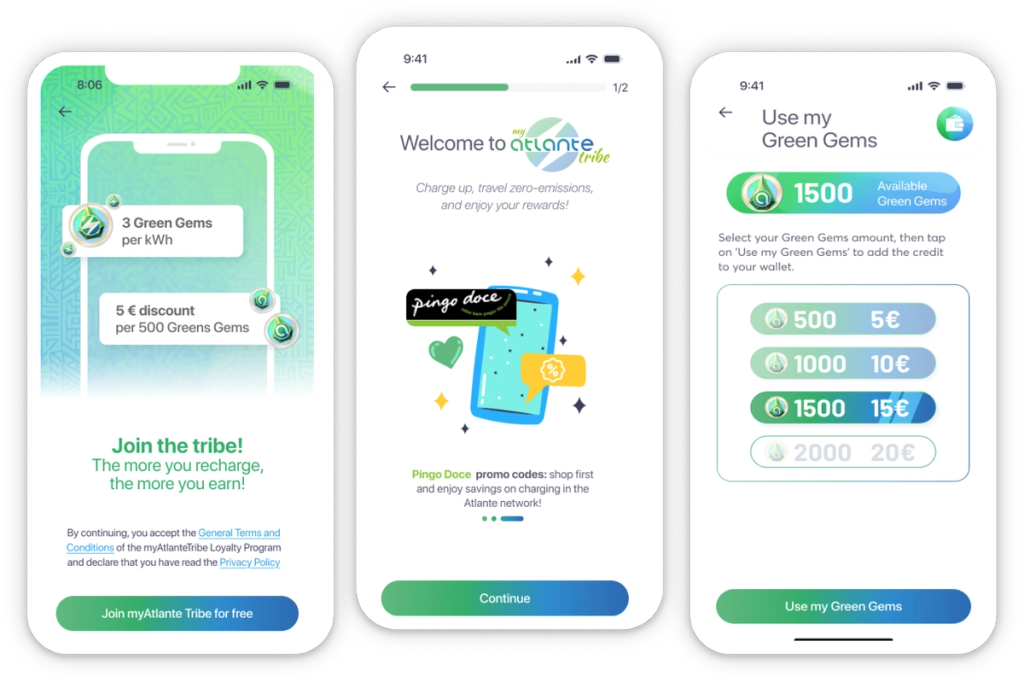
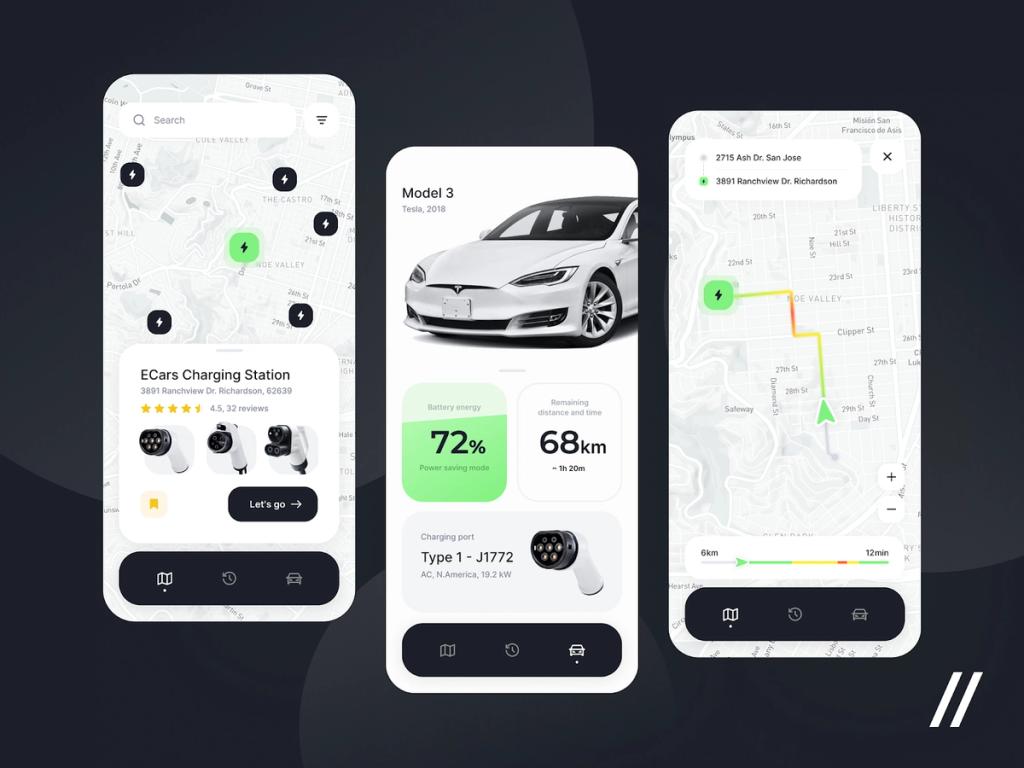
image by Stormotion
Branded CPO / operator driver apps
Most CPO apps eventually outgrow their basic white-label product: the interface feels generic, required features are not on the vendor’s roadmap, and replacing the app risks disrupting existing drivers and operations. We modernize live charging products without treating them like clean-slate builds.
Charging session flows: start, recover, and complete when station status changes mid-session
Map with real-time availability, filters, and a clear state when a connector is unknown
Tariff display, session history, and in-app billing
OCPI/OCPP backend integration and roaming support
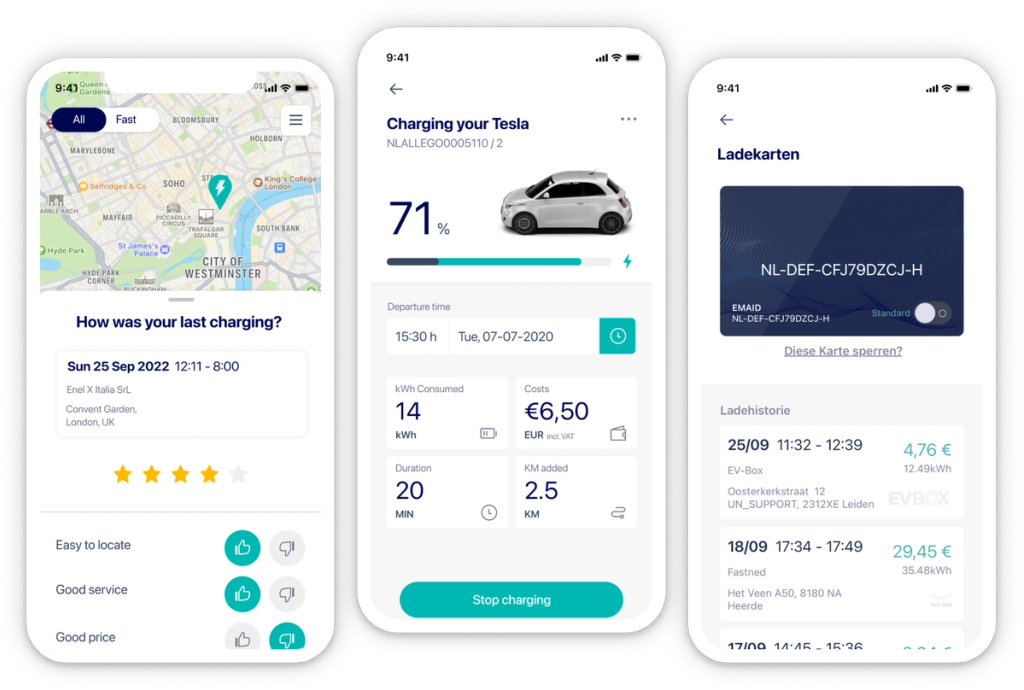
image by Stormotion
Multi-brand / white-label EV app products
We build white-label products for electric vehicles, where brand-specific changes - colors, logos, onboarding processes - are clearly separated from the product core. A new client does not mean a new repository.
Shared app core with per-client brand and config layer
SDK extension and white-label customization within existing frameworks
CMS for client-specific content, campaigns, and loyalty programs
Multi-client release management without codebase sprawl
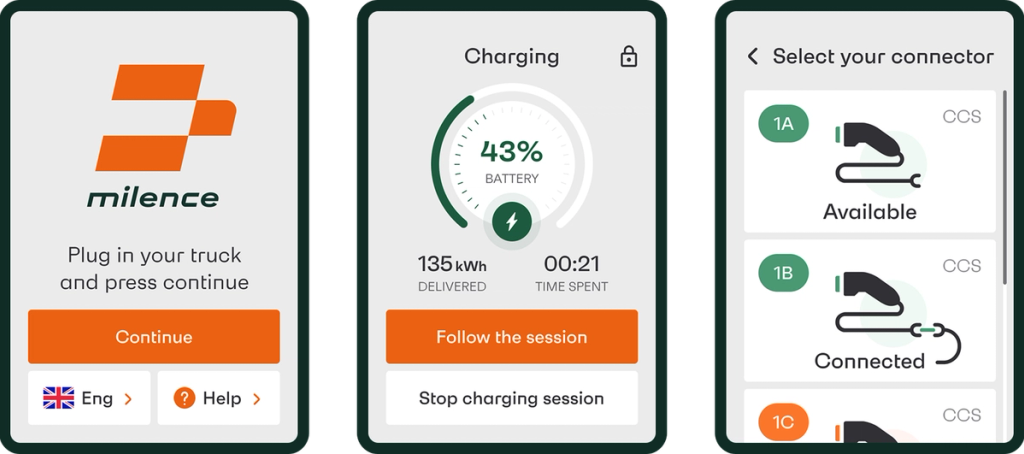
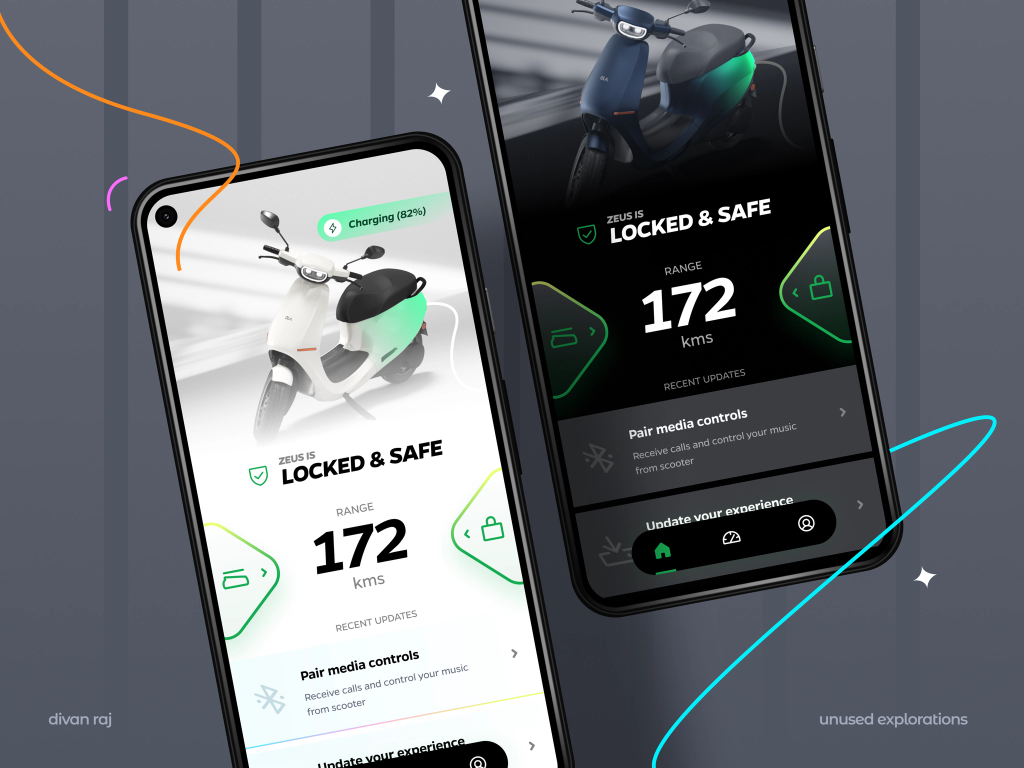
image by Stormotion
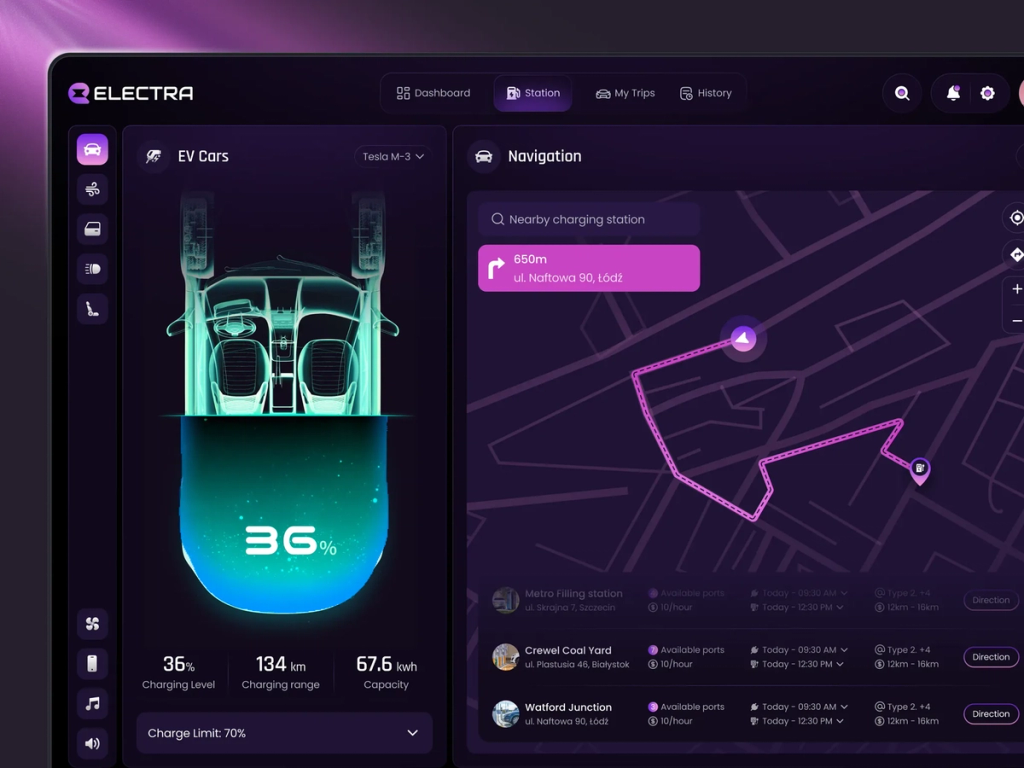
Charging terminal apps (Android kiosk and payment terminal software)
Payment terminals have real limitations: small screens, limited color reproduction, outdated versions of Android, and a vendor approval process that adds several months to the project timeline. We developed an app for the Milence truck charging station network based on Worldline Valina terminals, passed NDT security testing, and implemented a complete payment flow from pre-authorization to session completion.
Native Android apps for embedded payment terminals and kiosks
Payment flows: bank card, RFID, pre-authorization, and incremental reservation
Custom UI within hardware constraints - screen size, color, and performance
Vendor compliance and security testing (NDT and similar requirements)
design by Nasir Uddin
eMSP and multi-network charging apps
Drivers don’t want to have five different apps for five different networks. We develop eMSP apps that work across multiple networks and with various backends - including edge cases that universal solutions overlook.
Multi-network map with real-time charger availability
eRoaming support and cross-provider session management
Subscription and tariff logic across different charging networks
Payment flows: Apple/Google Pay, cards, RFID, and pre-authorization
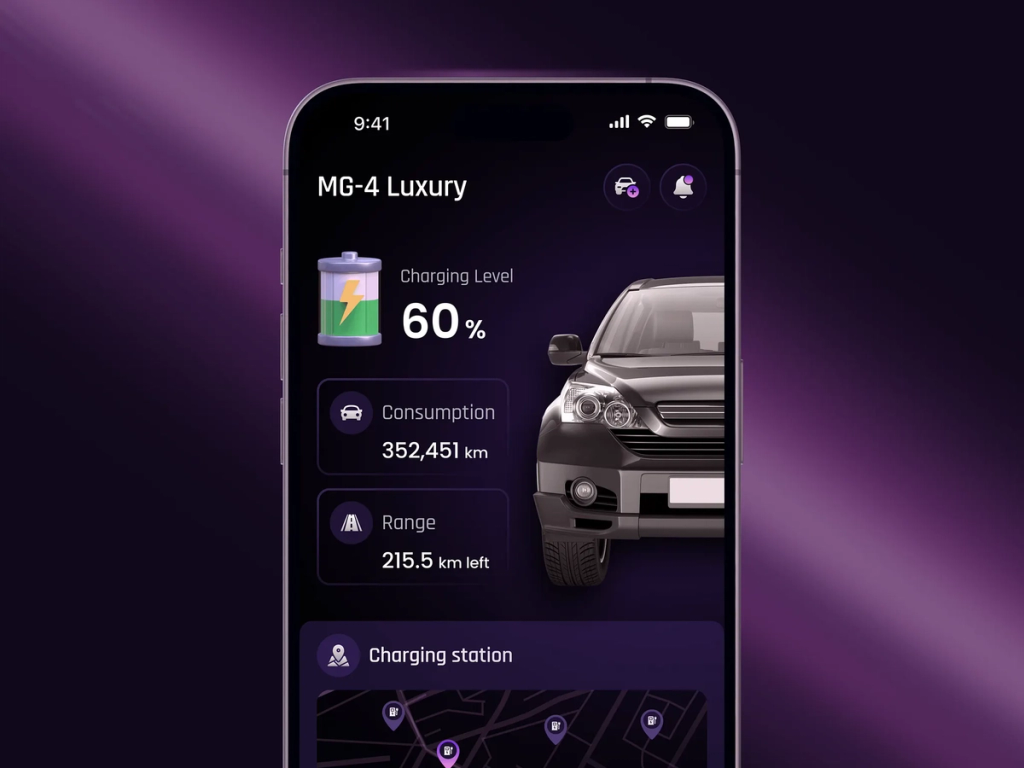
image by Musemind Mobile
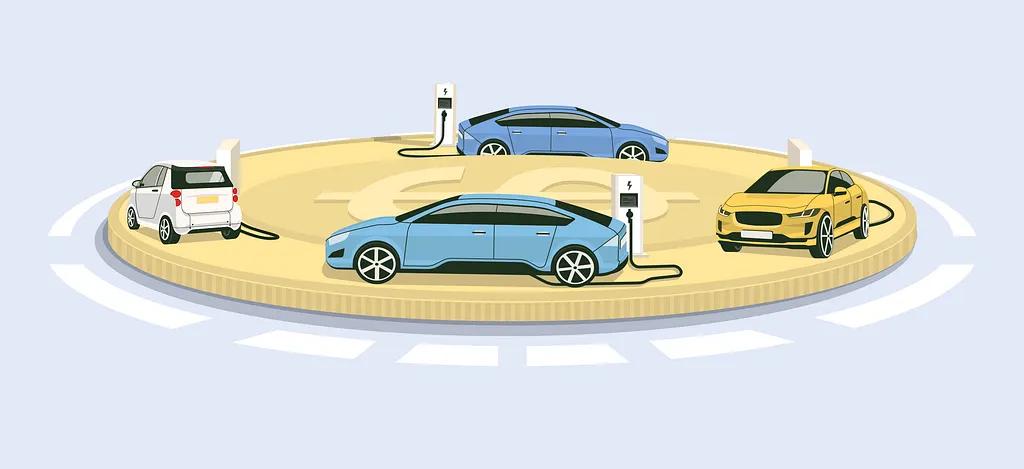
Multi-context charging apps (public, home, and workplace)
Charging in public spaces, at home, and at work may seem the same at first glance, but in reality, it works completely differently - with different access logic, different pricing models, and different types of users. Most apps handle one of these contexts well, while treating the others as mere add-ons. We build products where all three contexts are implemented at the highest level from the very beginning, rather than added as secondary features in V3.
Public charging: map, roaming, open access, and guest payment flows
Home charging: device pairing, personal tariffs, and scheduled charging
Workplace charging: access control, cost allocation, and fleet or employee billing
Shared account and session logic across all three contexts
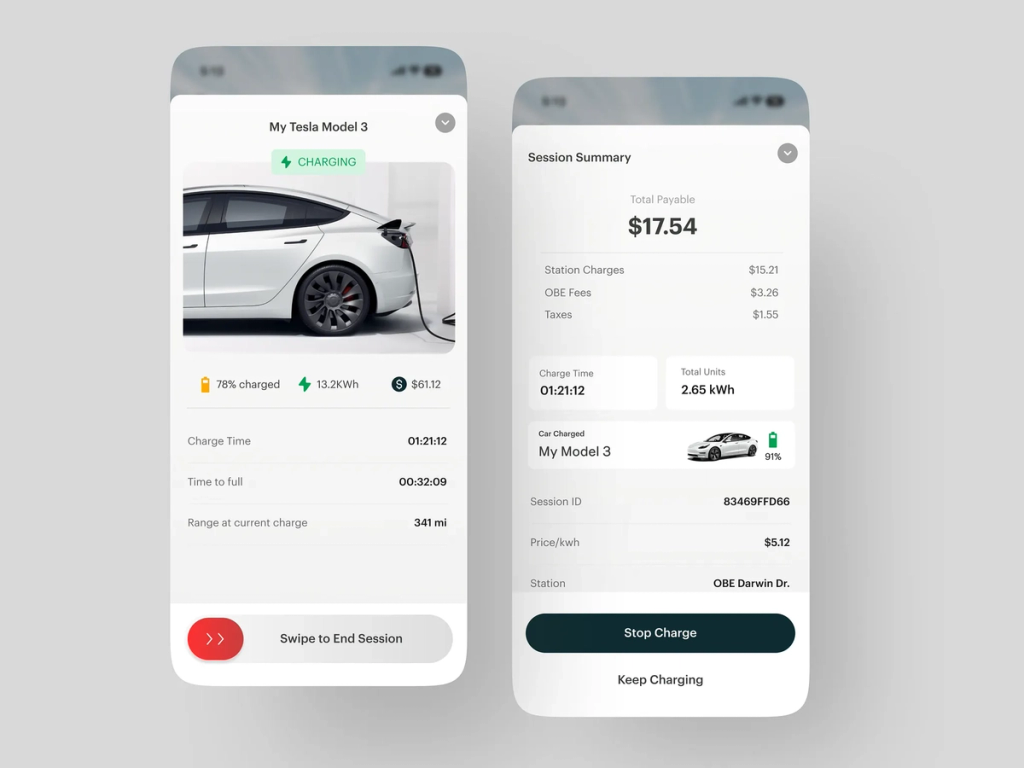
image by Ajay Shekhawat
EV charging apps with subscription, tariff, and payment logic
Pricing in the electric vehicle charging sector is rarely straightforward: a single charging session may involve fixed rates, time-based rates, various subscription tiers, roaming surcharges, and loyalty program discounts. To implement this correctly in an app, you need to ensure data is processed correctly at every stage of the user journey: from the map pin to the session screen, receipt, and payment history. We developed this logic with the specific features of various markets and payment systems in mind.
Subscription plans with access rights and usage limits
Dynamic tariff display tied to real-time backend data
Payment flows: Apple/Google Pay, cards, RFID, and pre-authorization
Loyalty programs, promo codes, and partner discount integrations
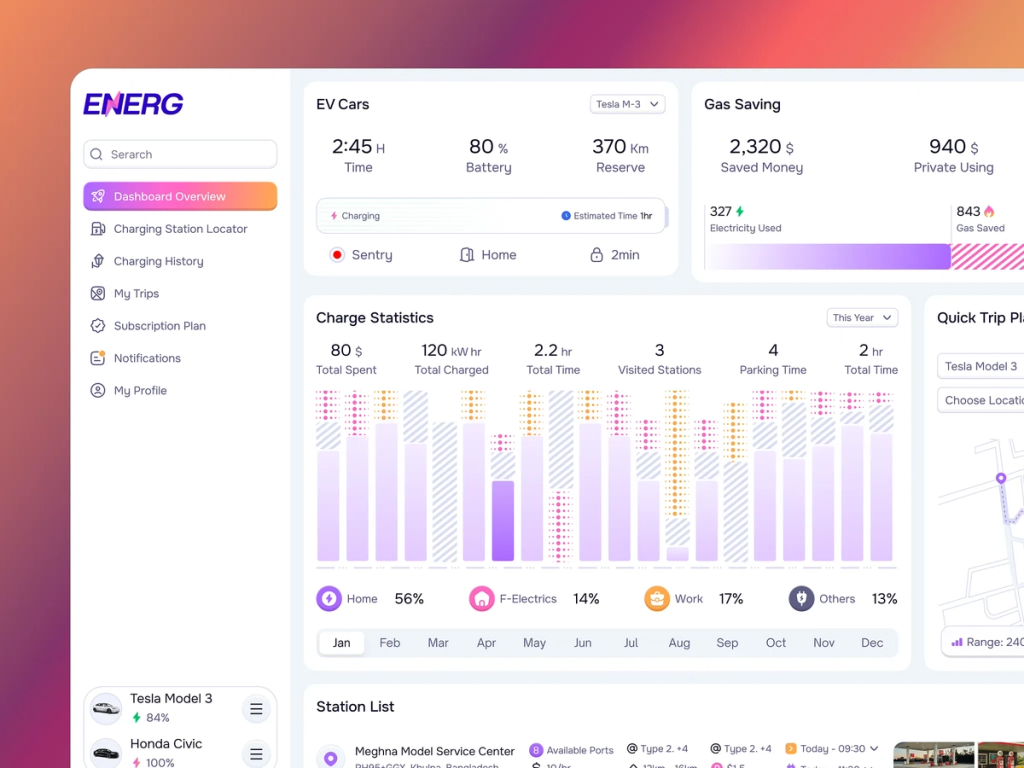
image by Rakibul 🏀
B2C driver apps + B2B portals and back-office tools
Driver apps and back-office tools are often developed by different teams at different times. And it shows inconsistent access permissions, out-of-sync session data, and business logic scattered across two places. We develop both sides of the product and ensure they work together from the start, rather than dealing with integration later.
Driver app flows connected to B2B portal permissions and access logic
Fleet and corporate account management with cost allocation
Back-office tools: station monitoring, tariff management, and reporting
Shared data layer between consumer and business surfaces
Latest Projects by Our EV Charging App Development Firm
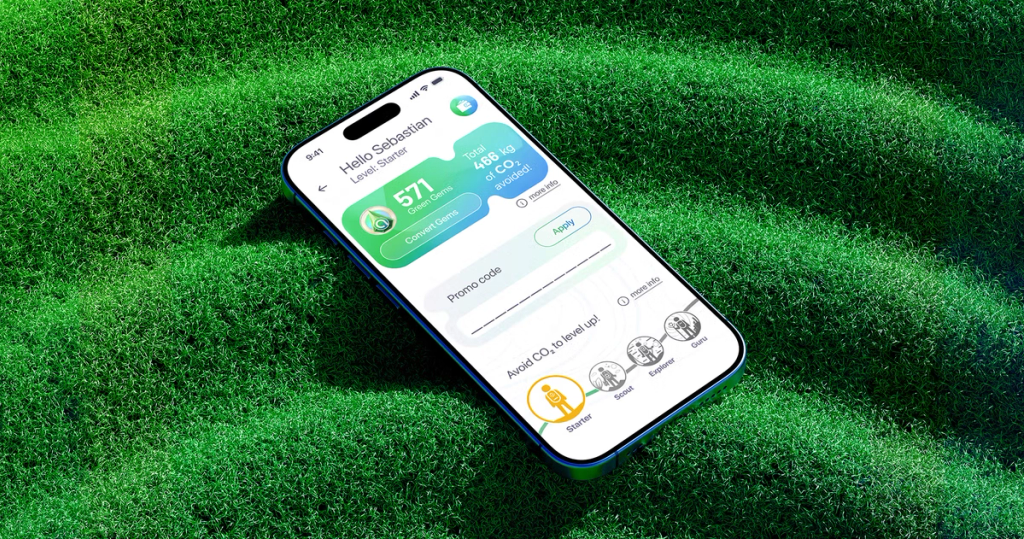
CPO driver app
Atlante is the largest fast-charging network in Southern Europe, with 4,084 charging points in Italy, France, Spain, and Portugal - all powered by 100% green energy. Our EV charging app development firm expanded their white-label app by adding a custom loyalty program in 11 languages.
View case study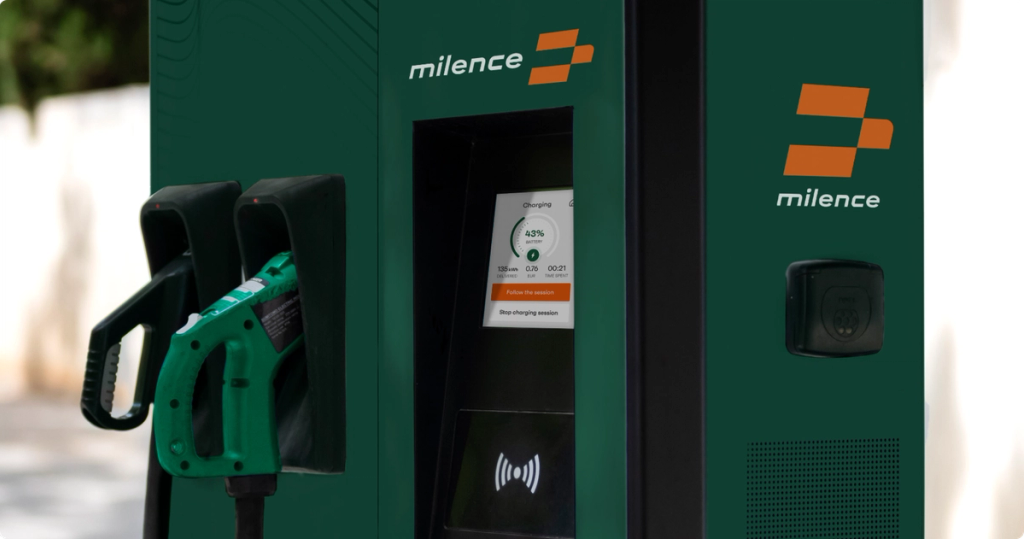
Payment terminal app for EV charging stations
Milence is a European truck charging network. A joint venture between Daimler Truck, Volvo, and the TRATON Group, creating Europe’s first large-scale charging network for heavy-duty trucks. We developed an app for Android terminals for their payment stations - from scratch, passing supplier security testing - in 8 European countries.
View case study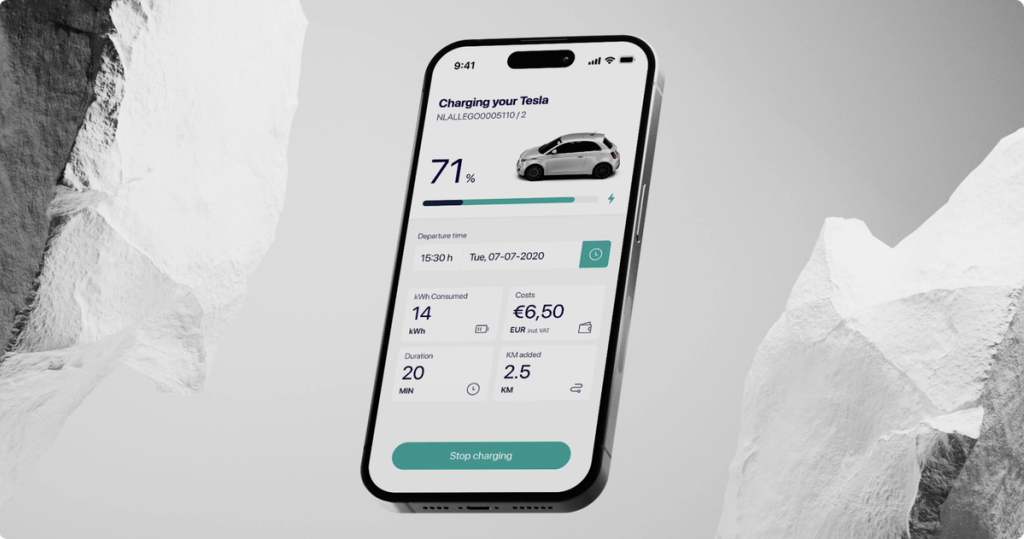
White-label EV charging platform
A Netherlands-based electric mobility platform serving over 40 charging station operator clients across Europe. We modernized a core white-label app that operators use to launch their own branded charging services.
View case studyTech Stack
Frameworks
Programming Languages
Navigation
Networking & APIs
Backend & Data
State & Data Fetching
Payments & Monetization
External Devices / IoT & Connectivity
Maps & Location
Graphics, Video & Audio
Forms & Validation
Internationalization
Analytics & Monitoring
Testing & QA
CI/CD & Delivery
AI / Machine Learning
AI Coding Assistants
Admin & CMS

React

React Native

Expo

Gatsby

Next.js

Hasura

NestJS










What Clients Say About Our EV Charging Station App Development Company



"I had meetings with 30 different agencies and the team at Stormotion gave me the most confidence to go forward. With them you feel like you've got a kind, knowledgable & conscientious team behind you. So I was 100% sure that they're going to be able to deliver our project!"


"We originally got in touch with Stormotion from our original app developer. And very soon we found real value in choosing Stormotion, because they previously had real valuable experience on the field – digital apps working in the realm of EV charging. So, it was really a no-brainer for us to to go with them."


"If you're thinking of going to Stormotion, you're going to have a very easy team to talk to, to communicate with, to understand what you want to do. They will tell you if you're barking up the wrong tree and are going to waste your time and money. I'd say "give it a go!" and I thoroughly recommend Stormotion."


"Stormotion stood out because of their focus on Bluetooth-connected products. They weren't just app developers, they understood the unique challenges of building mobile app experience for hardware products. Their collaborative approach, technical expertise, and ability to quickly grasp the vision of the North Guardian app made it clear that they were the right fit."


"I highly recommend Stormotion as a service provider for app development. They're young, flexible, dynamic, creative and very fast. The cost of planning and implementation is also reasonable. As they use "pay as you go", have a good plan first – then the result also will be satisfactory."


"The Stormotion team quickly became our team for everything Native app-related. It would be hard to name all the things that we built over the many years we worked together, but overall, I think we had a good partner who was able to adapt the way we worked, and the way they worked. So that we could ultimately build a product that had the quality that we wanted and with the speed that we wanted."


"Given a tough budget and a lack of knowledge in our own engineering team, we quickly came to Stormotion. We had already worked together on previous projects, and I knew that, based on React Native, we could have one engineer responsible for it. That was just amazing because I could really focus on our customer side, knowing that the mobile application for the testers was in very good hands."


"Trust Stormotion. Work with them on your road map, on your technical debt. Also, expect feedback because the team is eager to do this. It's what I value and, I think, many startups value."


"Working with Stormotion was a blast! The Project Managers, and especially Alex, are always there for you when you need them to go the extra mile. And it's very easy to communicate with them. Whether it's something urgent or whether it's a bigger task, like building the structure of the architecture, I always felt like I was treated very well. Stormotion delivered a great app experience from day one."
Our Core Strength in Custom EV Charging App Development
1
App rebuilds and migration
Most of the electric vehicle apps we work on aren’t new. They’re products that have simply outgrown their current setup. We’ve redesigned and updated charging apps for operators with existing users, complex backend dependencies, and operational processes that can’t be disrupted. That’s why we always build on what’s already there, rather than starting from scratch.
2
Feature parity planning for V1 releases
Before we begin development, we analyze the current product. We look at what’s already there, what absolutely must be included in V1, and what can be postponed. This allows us to move forward calmly and without unnecessary risks - especially for users who are already using the product.
3
Public, home, and workplace charging in one product
At first glance, public, home, and workplace charging seem similar. But they’re not. They have different access logic, different pricing plans, and different users. We’ve built products where all of this had to be combined into a single app. And that’s not so simple. It’s important to establish the right structure from the start so that nothing looks like an afterthought, which is a core part of our custom EV charging app development approach.
4
OCPI/OCPP integrations and roaming logic
We have integrated OCPI into several projects - Atlante, zuup, and others. This has enabled us to configure roaming between networks, switching between carriers, and ensure proper session management across different backends. If a client already has their own CPMS system or partner platform, we do not attempt to bypass it. We build on top of it and take its limitations into account.
5
White-label architecture that scales across brands
We have worked with white-label solutions from both sides: as clients using someone else’s SDK (for example, Atlante based on Deftpower) and as a team creating a base product for others. The key here is to separate the product level from the brand level. That way, each new client doesn’t turn into a separate codebase, which is a typical challenge in this space for any EV charging station app development company.
6
B2C app and B2B portal - built to work together
Driver apps are integrated with fleet management tools, corporate accounts, and the back office. If these components are developed separately, they eventually become out of sync and no longer align logically. That’s why we build them on a single shared data layer from the very beginning. This ensures that access rights, sessions, and billing remain consistent across the entire system.
7
Multi-market delivery: localization, payments, and compliance
We’ve launched EV products in Europe and Australia - with different payment systems, roaming, regulatory requirements, and languages. For example, for Atlante, we supported 11 languages across 4 countries and fully tested the interface through BrowserStack. Localization is the easiest part. It’s more challenging to ensure that the product logic remains consistent across different markets.
Custom EV Charging App Development Services: Collaboration Models
Pre-Project
Discovery Stage
Planing
Agile Development
UX-Prototyping
Design
Development
QA & Testing
Transition
Maintenance
Handover
Next Iteration
We operate as a full-cycle development partner – from initial product concepts through release and ongoing support. Before starting development, we always assess the current situation: what already exists, what should be included in the first version (V1), and where risks might arise during migration or integration. This helps keep redevelopment projects on schedule and prevents disruptions to existing systems.
Depending on the project phase, we can assist with various tasks as part of our custom EV charging app development services:
- requirements analysis, functional compliance planning, and migration risk assessment
- UX design for EV-specific scenarios: charging sessions, maps, payments, and access logic
- development and QA of the entire product - driver apps, B2B portals, or terminal software
- architectural solutions for white-label, multi-brand, and multi-market products
The result is a team that understands EV products from the inside out - from backend dependencies to migration risks. And we take on not only the execution of tasks but also responsibility for the outcome.
Why our EV clients stay with us
Contact Us!-
9+ Years in EV and eMobility
Since 2017, we’ve been developing products for EV charging - apps for charging station operators (CPOs), eMSP platforms, white-label solutions, and software for payment terminals. We know this industry inside out: how processes work, where technical limitations lie, and where problems most often arise.
-
3.3 Years Average Client Partnership
Atlante, Deftpower, Milence, Enercity, zuup - all active, all ongoing. We don't disappear after launch. Most of our EV clients have been working with us for years - through releases, migrations, new markets, and product iterations.
-
3.7 Years Average Engineer Tenure
Our engineers stay. That means the person who built the charging session flow is still there when you need to change it. No knowledge loss, no ramp-up, no explaining the same context twice.
Our Blog
All blog posts
FAQ
How much does it cost to develop an EV charging app?
Every EV project is unique, and it’s impossible to give an exact price. There are simply too many variables in the EV sector when estimating EV charging app development cost. Typically, the basic V1 version - with core charging scenarios, a map, payments, and session management - costs between $50,000 and $70,000. More complex solutions - such as white-label architecture, multi-market support, or terminal software - can cost significantly more.
How long does it take to rebuild an existing EV charging app without disrupting live users?
The timeline depends on how complex the existing product is and how much functionality needs to be included in the first version. If we’re talking about a targeted redesign with a clear scope of work, it usually takes 4–6 months. Most of the time is spent not on the development itself, but on preparation: figuring out what already exists, what can’t be broken, and how to structure releases so as not to disrupt users who are already using the product.
Do you work with existing backends, CPMS platforms, or white-label SDKs, or do you build from scratch?
Both, but most of our work in the electric vehicle sector involves existing infrastructure. We don’t need to own the backend to ensure a reliable application experience - and we wouldn’t recommend reworking something that already works just to make our own lives easier.
Can you support both the driver app and the B2B portal, or only one side?
We’re skilled at working with both the front end and the back office - and more often than not, that’s exactly what’s needed. When the driver app and internal tools are built by different teams, things start to fall apart over time: access rights don’t match, sessions aren’t synchronized, and billing looks different in different parts of the system. That’s why we build both sides on a shared data layer from the very beginning, so this doesn’t become a problem six months after launch.
How do you handle confidentiality and security of data?
We use encryption for data storage and transmission while providing EV charging station app development services and implement secure communication protocols to protect data.
How do you address regulatory compliance in different regions, especially regarding data privacy laws like GDPR or CCPA?
We always adhere to regulatory requirements regarding data security and privacy. For Europe, this is the GDPR, and for the USA, it is the CCPA. In our EV charging station app development services practice, we have various examples of applications where we do not collect any user data or do so in accordance with the aforementioned requirements.
How do you ensure compliance with international standards and regulations relevant to EV charging systems?
In our collaboration with clients, we always implement and adhere to all relevant standards and regulations. From a technical perspective, this includes compliance with standards depending on the charging system (SAE J1772, IEC 62196, and CCS) and for connectors and communication protocols such as OCPP (Open Charge Point Protocol).
Our EV charging app development firm also adheres to safety regulations according to standards like UL 2202 in the USA or IEC 61851 in Europe, as well as environmental standards, data security, and privacy.
Can you integrate specific features such as real-time availability, dynamic pricing, and user analytics?
Of course, we always suggest and discuss with the client the addition of special features to the application. You can learn more about our EV charging app development services on our website, and find examples of our experience in the portfolio section.




Pauline Gugelot
Product Owner @ Milence
"Stormotion has really delivered on their promises. They’ve been very transparent about their progress, flexible in reacting to changes, and solution-focused in overcoming challenges. If they didn’t know something, they would find out, which gave us great confidence in their ability to go the extra mile."