Cross-Platform App Development Company
From companion apps for hardware devices to fitness, healthcare, and e-mobility platforms – we help companies bring profitable products to market. Launch MVPs, speed up feature development, change OEM solutions to custom apps, and modernize legacy code with our team.
Contact us
Why Choose Our Cross-Platform App Development Service?
8 years building cross-platform products
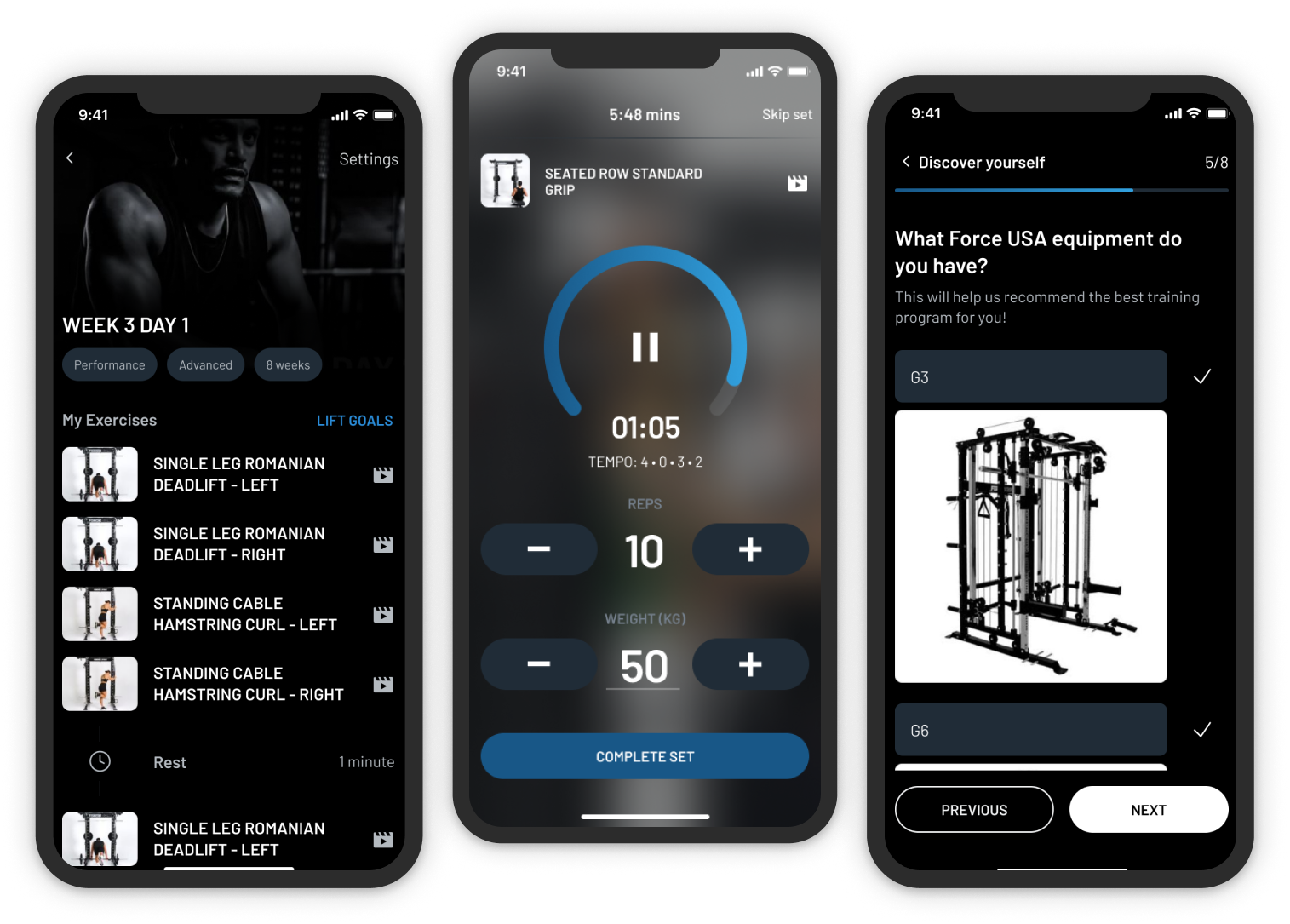
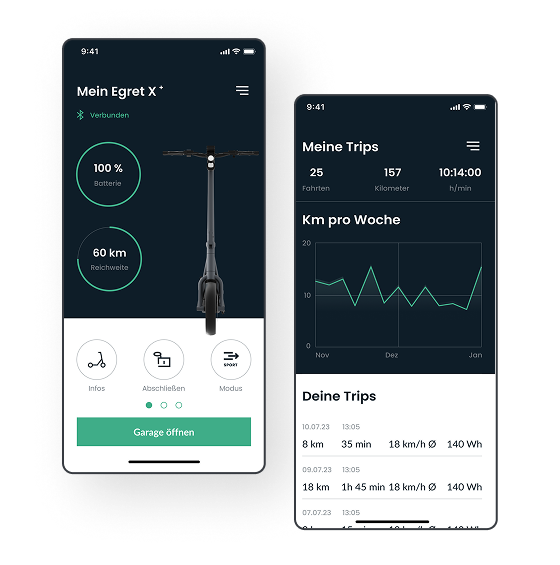
We’ve developed 55+ cross-platform products that connect software with the real world. We work with complex cases: companion apps with protocol integration (Egret, Norsk Guardian), platform redesign (Caspar Health), MVP and feature delivery (Force USA), and branded apps instead of OEM/white-label solutions.
3.2 years average client partnership across industries
From cross-platform EV charging apps, like Deftpower with 1,000,000 charging points in Europe, to a global leader in innovative fitness equipment, Forse USA, that has already sold 500,000+ units. They trust us because we deliver across all platforms, take ownership of the technology, and invest in long-term partnerships.
We hire 0.3% of React Native candidates
We attract top engineers who stay with us for about 3.7 years. You don’t have rotating contractors. You work with a constant, experienced team.
Cross-Platform Mobile App Development Company: Our Services
- Cross‑Platform App Development
- Companion App for Hardware
- White-Label & OEM App Replacement
- Ongoing Feature Delivery
- Code Audit & Modernization
- Maintenance & Support
- Quality Assurance


design by Stormotion
Cross-Platform App Development
Our team creates iOS and Android apps on a shared React Native codebase. We offer product discovery, architecture planning, feature development, and platform-specific optimizations. We launch MVPs in 4 months with a scalable architecture. After idea validation, we plan sprints to add new features and grow your business.
iOS & Android apps on the same code
Product discovery and roadmap planning
Performance optimization for each platform
App Store & Google Play submission


design by Stormotion
Companion App for Hardware
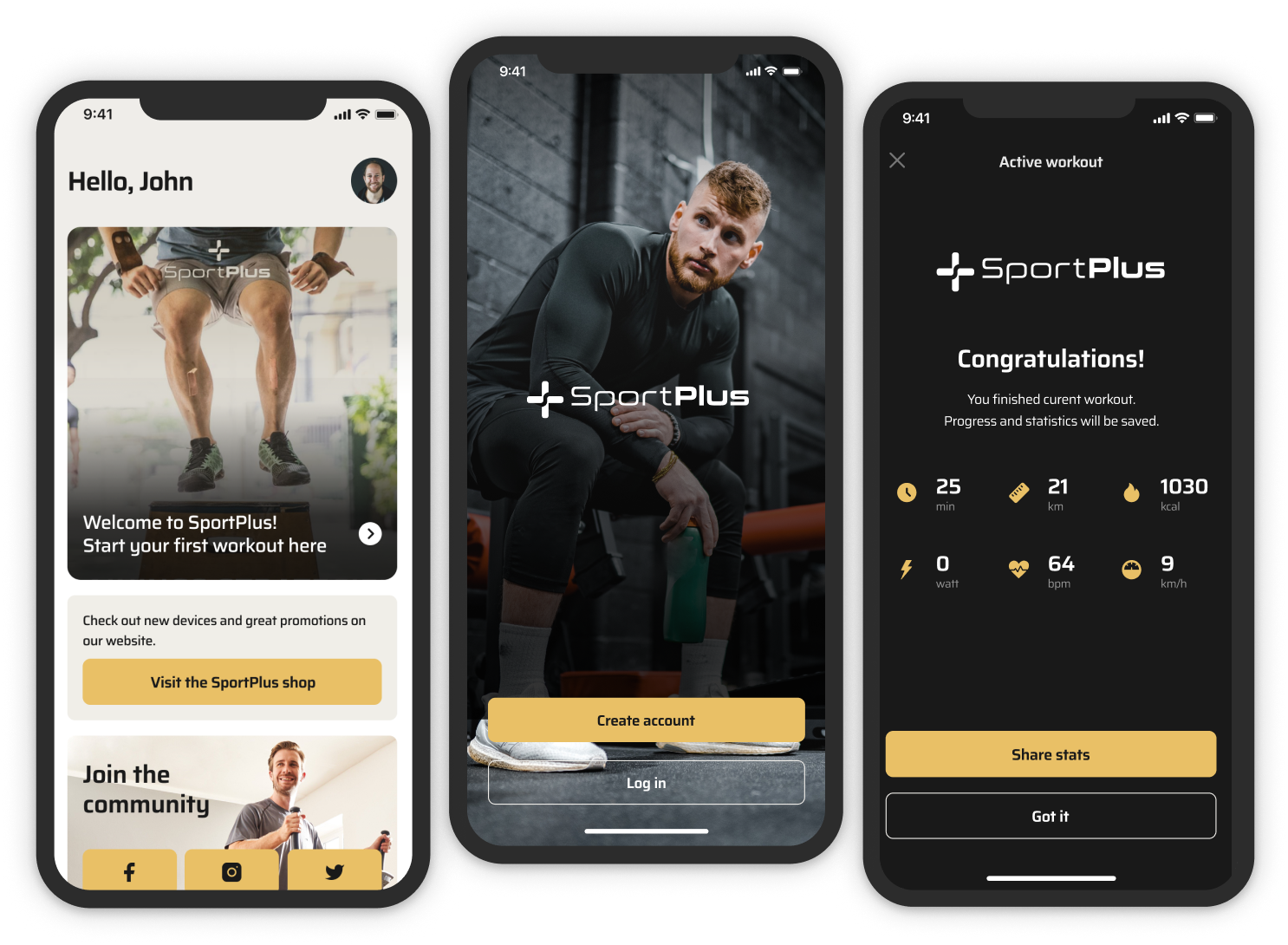
Do you need a companion app to increase the premium feel of your device? We develop mobile apps that connect with physical devices through BLE, Wi-Fi, or other protocols. Our companion apps handle real-time data synchronization, OTA firmware updates, device pairing, and offline functionality. Our process includes UI/UX design: user research, interactive prototypes, and cross-platform design (iOS and Android) that match your brand and improve retention.
Protocol integration (e.g., BLE, Serial, Zigbee, Matter, Thread)
Real-time communication
OTA firmware updates
HealthKit/Google Fit, wearables; smart home (HomeKit, Google Home) integration


design by Stormotion
White-Label & OEM App Replacement
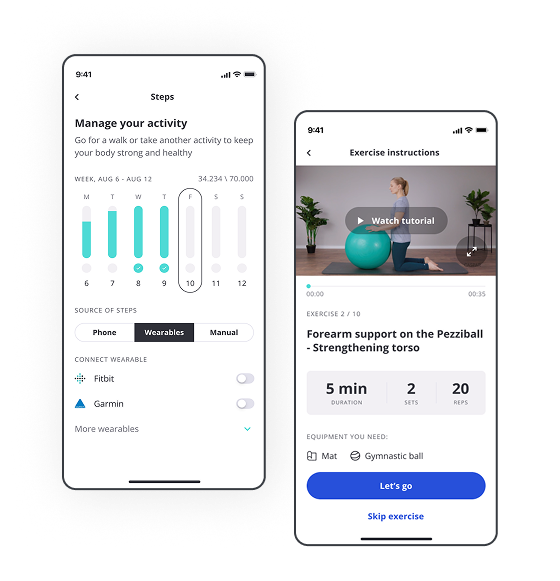
Aren’t satisfied with your current OEM or white-label app? We create custom solutions that give you full control over UX, features, and analytics. Our team optimizes protocol integration, redesigns UX, adds new features, and migrates to modern technologies like React Native.
Brand-based design
Full control of features and roadmap
Analytics (Amplitude, Firebase)
Quick migration from the existing white-label/OEM solution


design by Stormotion
Ongoing Feature Delivery & Growth
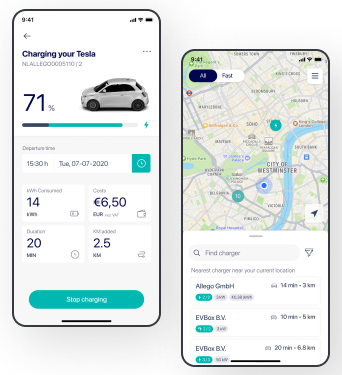
Common scenario: you have a 6-12 month roadmap to test ideas, like tablets/Smart TV support or wearable integration. But your team doesn't have the capacity to make this happen. We work as an extension of your team: build new features, improve performance, and adapt your app based on user expectations and market changes. Our team doesn't think just about code. We pay attention to your product metrics, know your tech stack, and can integrate into your development process using your existing code and components.
New feature development
Analytics integration (Amplitude, Firebase)
Performance monitoring and improvements


design by Stormotion
Code Audit & Modernization
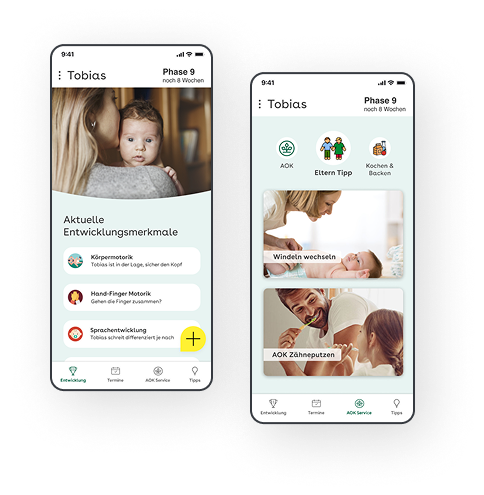
We offer a UX and tech audit of your current React Native application. You receive a detailed report with recommendations and roadmap: UX redesign, code refactoring, or complete rebuild. Then, you decide what we should do next.
Architecture and codebase review
Tech debt reduction
Migration to React Native
Gradual refactoring or complete rewrite


design by Stormotion
Maintenance & Support
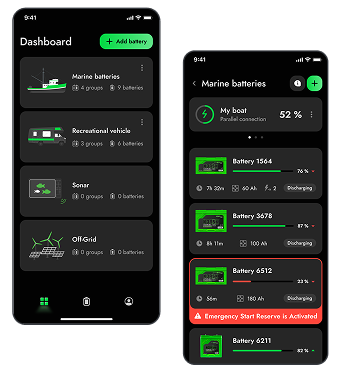
We maintain high performance across platforms (mobile, tablet, wearables) for real-world use. This includes bug fixes, OS updates as Apple and Google release new versions, security patches, and dependency updates. Our maintenance and support packages also include:
Crash monitoring
Performance issues fixes
Manual regression testing
Tech debt resolution

design by Stormotion
Quality Assurance
Our QA process makes sure your cross-platform app works as expected. For companion apps, we test protocol connection, real-time data sync, firmware updates, and cross-device compatibility. For all apps, we combine automated and manual testing to catch crashes, performance issues, and data errors before your users do.
Manual testing on real devices and equipment
Cross-platform compatibility test
Performance and real-time sync validation
Load testing for high-traffic platforms
Our Recent Cross-Platform App Development Projects
Our Industries



Fitness
Learn more


IoT & Connectivity
Learn more

EV & EMSP
Learn more

Healthcare & Mental Health
Learn moreCross-Platform Technology Stack
Frameworks
Programming Languages
External Devices / IoT & Connectivity
Navigation
Graphics, Video & Audio
Backend & Data
Networking & APIs
State & Data Fetching
Payments & Monetization
Maps & Location
Forms & Validation
Internationalization
Analytics & Monitoring
Testing & QA
CI/CD & Delivery
AI / Machine Learning
AI Coding Assistants
Admin & CMS
React
React Native

Expo

Gatsby

Next.js
Hasura

NestJS
Testimonials
Our Software Development Codex
1
Deliver solutions, not code.
Your value isn't in lines of code but in problems solved. Don't just execute requirements – understand your business challenge, question assumptions, and deliver outcomes that actually matter.
2
Your best effort means nothing if it doesn't work.
You can work late nights and write your best code ever, but if it breaks in production, nobody will see that effort – they'll only see the failure. Test your work before you ship it. Your hard work deserves to actually work.
3
Slow is smooth. Smooth is fast.
Prioritize clean code, solid architecture, and thoughtful decisions. True speed comes only after deep understanding. This principle applies especially to cross-platform app development services, where rushing leads to technical debt that slows everything down later.
4
Invented something? Great minds think alike.
It's obvious that rewriting a database from scratch makes no sense. Yet, too often we start coding without first checking if the problem has already been solved and shared.
5
Done is better than perfect. But some done is just version one.
Chasing perfection can waste time. It's okay to move on when something is good enough. But if we start building on top of weak work, it's worth going back and doing it right.
6
Duplicate. Abstract. Refine.
Code duplication is awful, but it is far cheaper than the wrong abstraction (Sandi Metz). The complexity of the abstraction has to reflect the complexity of the problem it solves.
7
Surface knowledge is surface value.
Using fancy technical words doesn't make you an expert. Real knowledge means understanding how things actually work and when to use them. Knowing just enough to sound smart is dangerous – it leads to bad decisions and overconfidence.
How can we help?
Thank you
Your message has been sent.
Our manager will contact you as soon as possible. Have a nice day!
To Home Page


Book a call with our Co-Founder, Roman, to explore your cross-platform project.
Cross-Platform App Development Process: Collaboration Models
Product-Based
Talent-Based
Client
Stormotion
Client Supervisor
SM Dev
SM Dev
Client
Stormotion Engineers + Your Team
One or more senior React Native engineers join your existing team. Our developers work in your sprints and collaborate with your Product Owner, PM, or engineering lead.
Typical use cases:
- Planning feature delivery and speeding up your existing mobile roadmap
- Adding mobile expertise to a web-focused engineering team
- Bringing in engineers for complex integrations (hardware connectivity, protocol integration, etc.)
Client
Stormotion
Product Owner
SM Dev
SM Dev
SM Dev
SM Dev
Standalone Stormotion Team
A dedicated team that includes React Native developers, backend engineers, QA, and a PM – ready to build your product from scratch or improve an existing app. We take care of the development cycle, and you focus on the business side of things.
Typical use cases:
- Creating a new mobile product without hiring an in-house mobile team
- Building a branded solution to replace your white-label OEM app
- Rescuing an unstable app built by a previous vendor and stabilizing it for growth
Our Excellence Pillars
Contact usTechnology consulting & co‑creation
We identify potential issues, question assumptions, and give solutions. Our teams bring product thinking, technical roadmap, and architecture decisions to avoid tech debt. You get a partner who takes ownership, not just a team executing tickets.
4 months to MVP: fast market entry
We deliver MVPs in just 4 months through our expertise and smart tech stack choices. Our team adjusts timelines based on your specific needs, so you see results within months. You pitch products to investors and validate ideas with real users without burning budgets.
Hardware & wearable connectivity expertise
We work with real-time data sync for connected hardware, OTA firmware updates, and integration of wearables and smart systems. Our team handles multi-protocol connectivity and protocol reverse engineering for undocumented hardware.


![React Native vs Native Development [2026]: Insights from Stormotion’s CTO](https://cdn.sanity.io/images/ordgikwe/production/d3b235f9e44ba58223b1fd220eabefffe331be3a-1504x1128.png?w=1504&h=1128&auto=format)






Cross-Platform Mobile App Development Agency: FAQ
What is cross-platform app development?
Think of it this way: instead of hiring two teams to build your app twice ( for iPhone and Android), you build it once with a React Native framework. The app runs natively on both platforms from a single codebase.
Why does this matter? You're saving development time by about a third, maybe more. Plus, you don’t have to maintain two different apps that need to stay in sync. When you fix a bug, you fix it once. When you add a feature, you add it once.
Sometimes you need platform-specific integration, like Apple's HealthKit, or a unique Android feature. No problem. We integrate them via React Native libraries or native modules.
Will a cross-platform MVP scale as we grow?
Yes, but only when you build your app right from the beginning. The problem is when teams treat MVP as a dummy prototype. That's how you end up doing a complete rewrite when you hit 10,000 users. Our cross-platform mobile app development agency thinks about scale during the discovery phase. We help you choose the right tech stack, set up proper state management, and build the app in sprints.
How much does it cost for a company to develop a cross-platform app?
The cost depends on what app type you’re building. Our development unit (full-time developers + part-time QA, UX/UI designer, PM) costs about $10,000-$15,000 per month.
An MVP takes 3-4 months to build, so it costs between $30,000 and $60,000. But if you build the companion app for hardware devices, it can take 5-8 months to build and cost $50,000-$120,000. A complex platform with backend APIs, wearables, admin panels, and compliance requirements can take 8-12 months to develop and cost $120,000-$180,000.
How long does it take to build a cross-platform MVP?
The main task of MVP is to test your idea, not to launch every possible feature. A basic version with standard functionality usually takes 3-4 months to create. If you need a companion app for a hardware device, it can take 5-8 months to build. Contact us, and we will prepare the estimated timeline for your project.
How do you rescue a failing React Native app built by another company?
Our cross-platform mobile app development services start with a UX and technical discovery. Most apps have problems in both areas.
We do a combined audit: UX issues, code quality, performance bottlenecks, security gaps, and technical debt. You get a report that prioritizes fixes based on impact, not just severity. Then you decide: gradual refactoring or complete rebuild.
If the app has core problems, we improve it incrementally while keeping the app running. Nobody wants their app to go dark for three months during a rebuild.
Which is the best cross-platform app development company?
There isn't one "best" cross-platform app development company. It depends on what you expect from the development team.
If you need a companion app for the hardware, find a team that has built software for real devices before. If you need to modernize an existing app, you should find a team who've rescued apps, not just built new ones from scratch.
You can look at how long clients stick around, check if they have case studies in your industry, and ask about engineer turnover. The last aspect is important because you need a stable team for your project without the need to onboard new members each time.
Can cross-platform apps connect to Bluetooth devices reliably?
Yes. For a standard BLE connection, React Native has open-source libraries, like react-native-ble-plx. If you have a custom protocol or hardware with unclear documentation, we write and integrate native modules into your app.
But the main rule is to test the application with real hardware. Simulators won't show you the actual BLE connection problems until production.
What's the difference between React Native and native app development?
Native development means creating separate apps for iOS in Swift and Android in Java/Kotlin. React Native, on the other hand, allows you to create two high-quality apps for iOS and Android with a single codebase. React Native apps are easier to improve and maintain since you need to make changes only once.