IoT App Development Company
We create companion apps for smart devices and connected hardware that become a premium part of your hardware product – without OEM limitations. Our engineers work with BLE, Zigbee, Matter, Thread, and Serial protocols, creating stable hardware-software connectivity.
Contact us
Why Choose Our IoT Application Development Services?
-
Since 2017: connecting hardware to software
We're not a general mobile development team. We focus on connected devices and work directly with your hardware engineers. We know the technical limitations and edge cases that break most IoT apps and how to build a product that scales as you add new device models and markets.
-
We know how to design UX for physical products
Stuck with outdated app design or building from scratch? We free you from generic UX that makes your hardware look unfinished. We design data-driven interfaces for physical products – where UX mistakes become physical problems. Our UX becomes a premium component that improves user retention and turns your app into a competitive advantage.
-
Connection stability: 95% client satisfaction
Your hardware needs a stable, branded, modern app. Without it, your product stays just a device – no added value, no growth beyond early adopters. Our team turns your hardware into a complete product that works reliably – no disconnections, no crashes, no device returns.
IoT App Development Solutions: Zone of Expertise
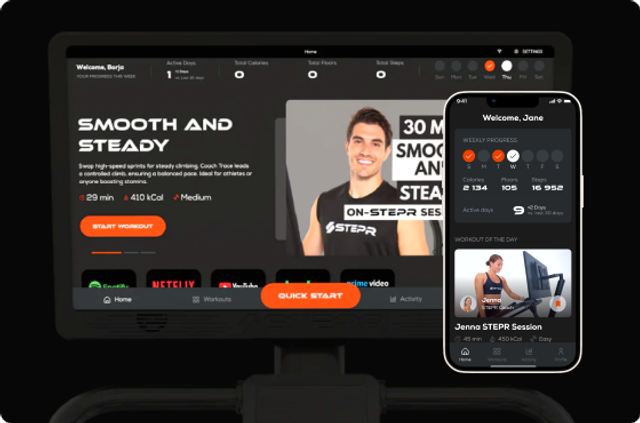
STEPR (design by Stormotion)
Connected Fitness Equipment Apps
We create apps for connected gym equipment, like treadmills, bikes, strength machines, and smart fitness devices. Our engineers handle real-time workout data, device control, and multiple user profiles for console-based or companion apps.
Real-time workout tracking and control
Multi-device and multi-user support
Resistance and speed control via BLE
Integration with Apple Health and Google Fit
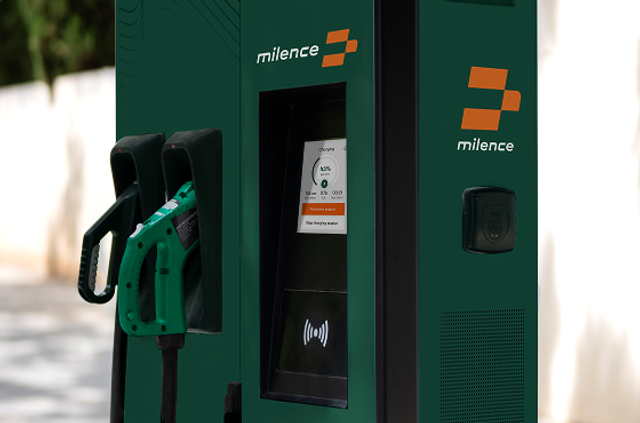
Milence (design by Stormotion)
Android Terminal & Kiosk Apps
We create custom Android apps for payment terminals, charging station consoles, and self-service kiosks. This includes custom launchers, payment integrations, and wired communication with hardware.
Custom Android launchers
Payment terminal integration
Wired protocol communication (USB, Serial)
Offline and semi-connected mode support
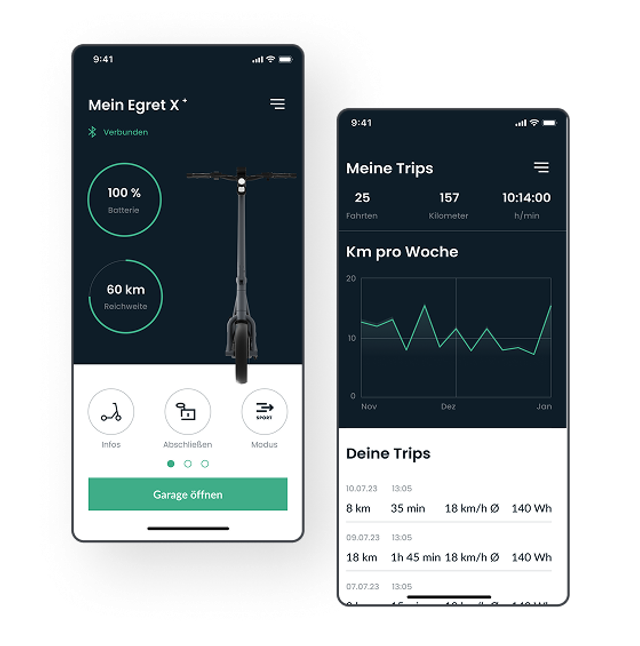
Egret (design by Stormotion)
E-Mobility & Micromobility Apps
We build companion apps for e-scooters, e-bikes, charging stations, and other electric mobility devices. Our apps handle real-time vehicle control, fleet management, and BLE communication with different hardware models.
Vehicle control (lights, speed modes, locks)
Battery and range monitoring
OTA firmware updates
Fleet and rider management
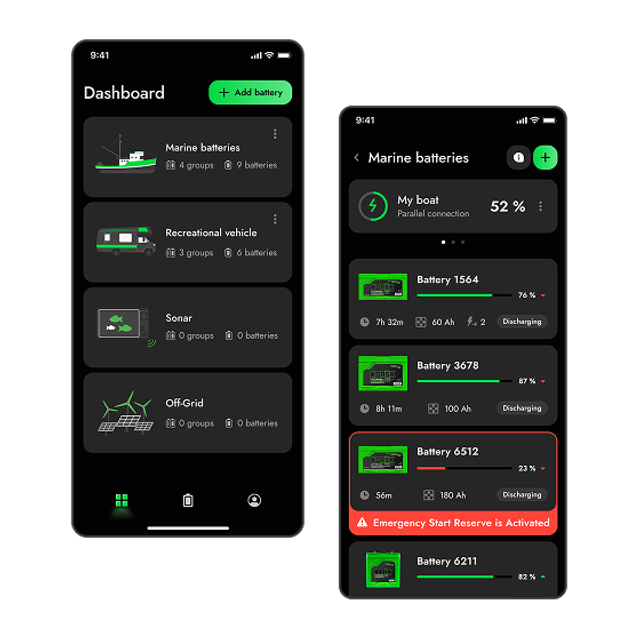
Norsk Guardian (design by Stormotion)
Battery & Energy Management Apps
Our IoT app development solutions include apps for portable batteries, solar systems, EV battery monitors, and power stations. We know how to display battery health, manage charging cycles, and work with different BMS (Battery Management System) providers.
Real-time battery status and health monitoring
Multi-battery management
Support for different BMS protocols
Auto-reconnect and background sync
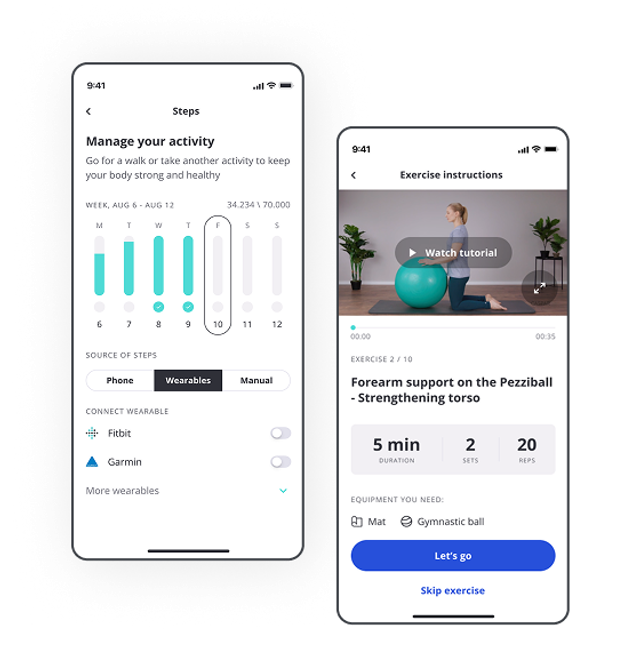
Caspar Health (design by Stormotion)
Healthcare & Remote Monitoring Apps
We understand the need for reliability and accuracy in healthcare applications. Our team builds apps for medical wearables, health trackers, and remote patient monitoring devices. As a part of our IoT application development services, we handle protocol communication with medical-grade devices, real-time health data sync, and integration with Apple Health and Google Fit.
Protocol connection with medical devices
Real-time health data tracking
Apple Health and Google Fit integration
Secure data handling and HIPAA considerations
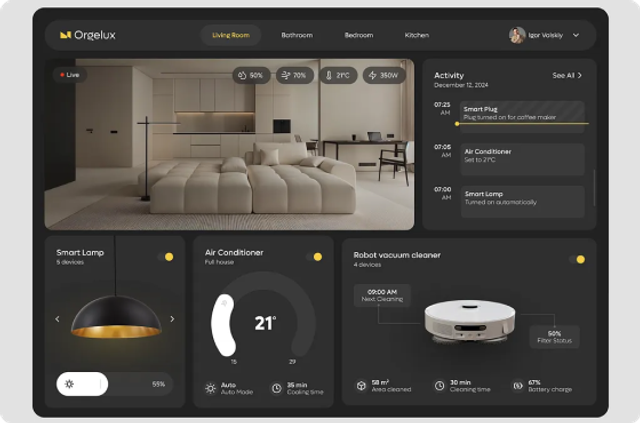
design by @Bato
Smart Home Software
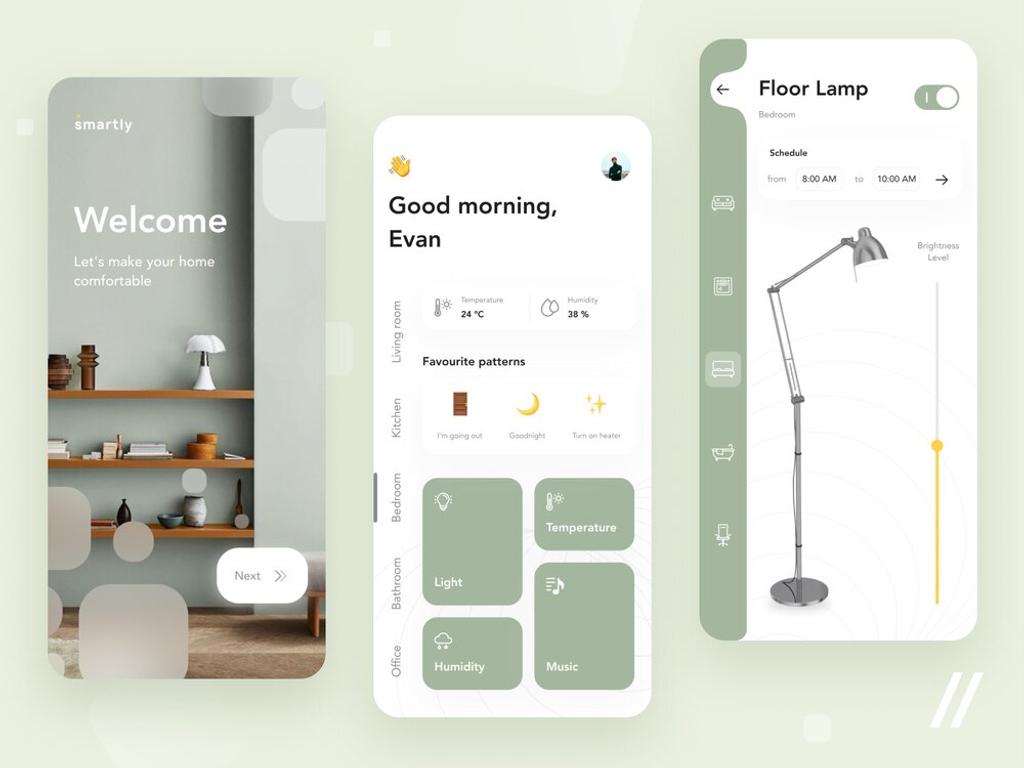
We create apps for connected home devices, like locks, thermostats, kitchen appliances, and sensors. Our engineers build apps that handle BLE and Wi-Fi protocols, device grouping, and automation scenarios.
Multi-device control and grouping
BLE and Wi-Fi protocol support
Automation rules and schedules
Real-time device status monitoring
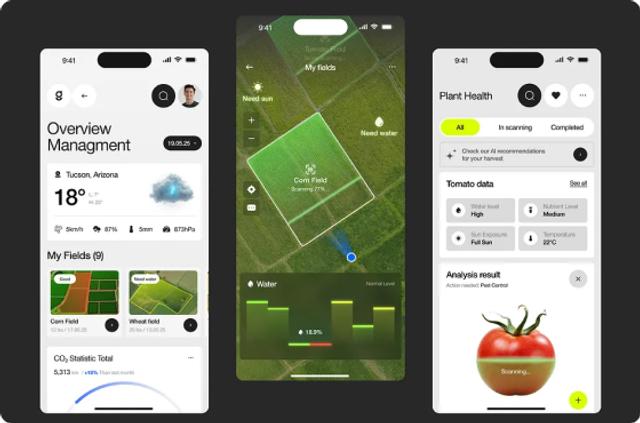
design by @VALMAX
Industrial Equipment & Sensor Monitoring Apps
We build apps for industrial machinery, logistics sensors, and asset tracking devices. Our apps handle real-time data from sensors, equipment control, and fleet monitoring. We work with BLE, LoRaWAN, and other industrial protocols to create apps that help businesses monitor and control their connected equipment.
Real-time sensor data monitoring
Equipment control and diagnostics
Asset and fleet tracking
Support for industrial protocols (Zigbee, LoRaWAN)
Our Recent IoT App Development Projects
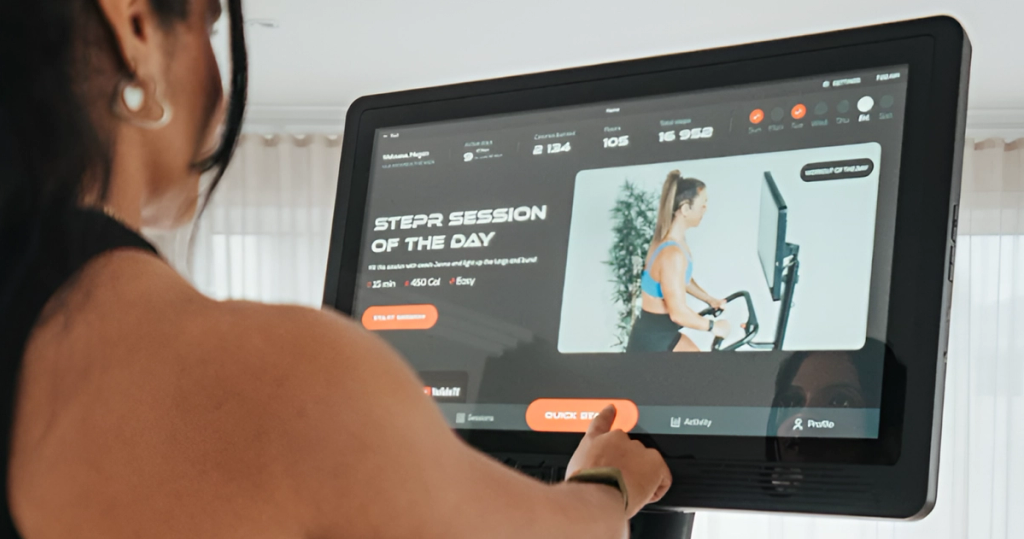
Console app for a stair climbing machine
STEPR is an Android-based console application that interacts with the stair-climber via a wired Serial protocol. We created a custom launcher with real-time workout tracking, entertainment (Netflix, Spotify), and OTA updates without Google Play.
View case study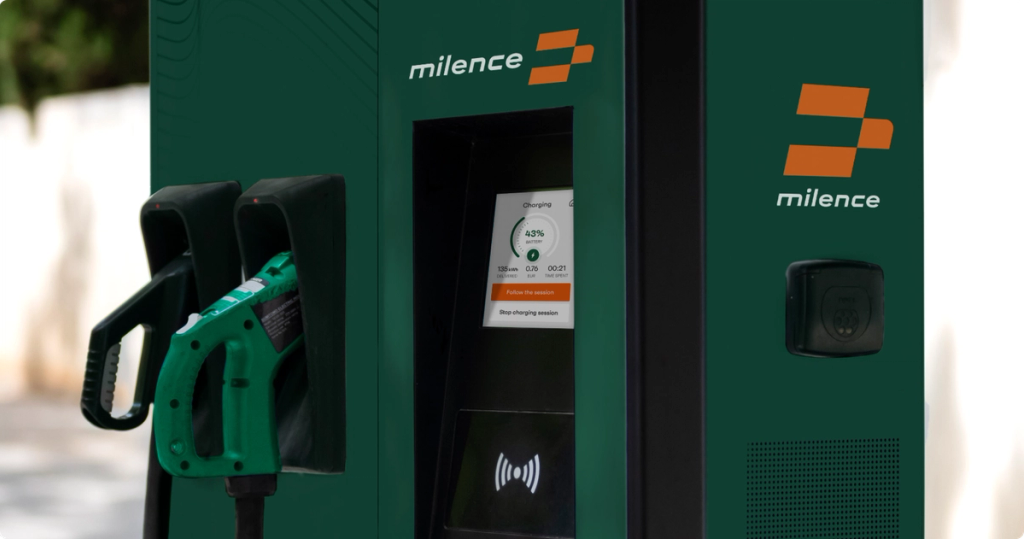
Payment terminal app for EV charging stations
Milence runs a network of charging stations for heavy-duty EV trucks. We created a custom Android app for payment terminals, handling card payments, managing charging sessions, and real-time statistics. The app passed security testing (NDT) and supports 9 languages in small terminal screens.
View case study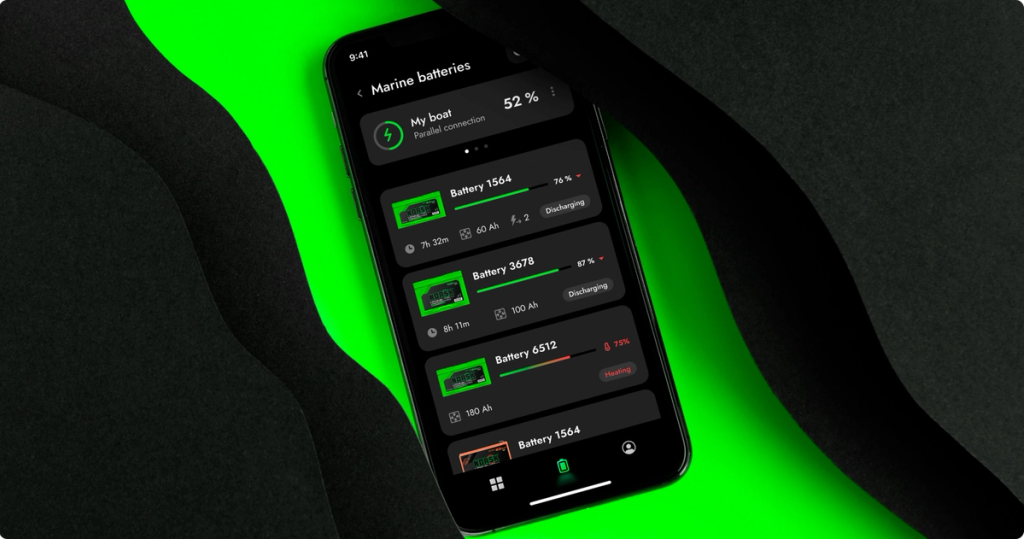
Marine battery management app
The Norsk Guardian app connects to lithium-ion batteries. We integrated the BLE communication and built a reliable connection that can perform even under severe marine conditions. The app monitors voltage, temperature, current charge, and sends warnings before critical circumstances arise.
View case study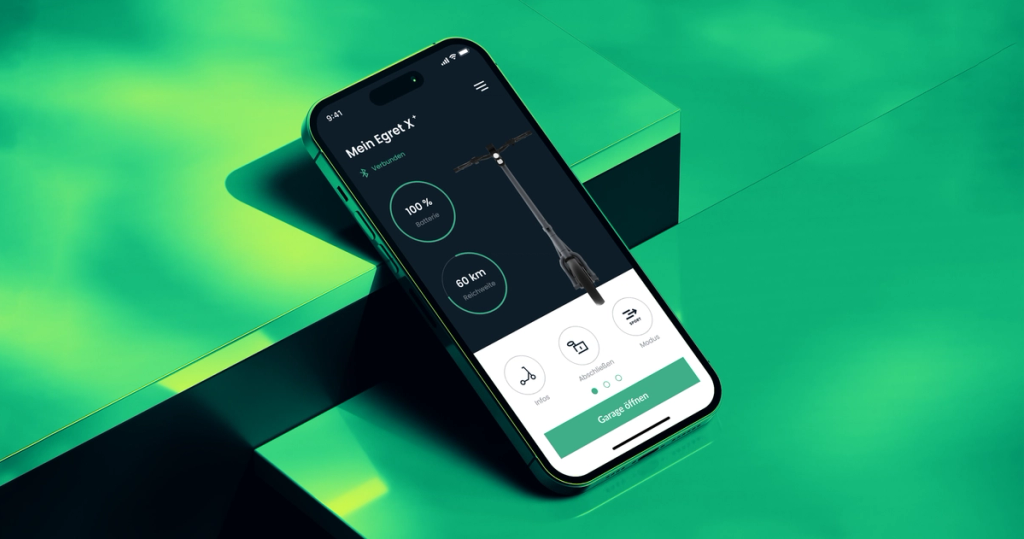
E-scooter companion app
Egret produces premium e-scooters. They required an application that would be compatible with various scooters with different BLE protocols. We rebuilt their React Native app with custom native modules, solving OTA update delays (reduced from 5 minutes) and enabling stable communication with different hardware variants.
View case studyOur IoT Mobile App Development Services
1
Building your IoT product from scratch
Your hardware is ready, but you need a stable app fast – without burning budget on the wrong team. We're a full product-technical partner who takes on product vision, not a vendor who disappears after launch. We build companion apps from discovery to launch – validating protocols early, designing UX for physical interactions, and testing on your actual devices. You get a scalable MVP that works with your hardware on day one.
2
Moving beyond OEM and white‑label apps
OEM and white-label apps are part of the inevitable hardware development process – they get you started fast. But to satisfy users and scale your product, you need a custom app that doesn't damage your brand with poor design. We build branded companion apps that match your product quality and help you stand out in the market instead of blending in with low-cost alternatives.
3
Legacy IoT app modernization
Your business is being held back by your legacy app. Old architecture, unstable connections, and tech debt prevent you from adding new functionality or supporting new device models. We start with a tech and UX audit to identify what's broken, then modernize your IoT app – fixing stability issues, updating architecture, and improving user experience. You get a clear roadmap from audit to launch without rebuilding from scratch.
4
Admin panels & dashboard development
Your IoT product needs admin tools to manage devices, monitor fleets, and visualize real-time data. We build dashboards that give you control over your connected ecosystem – device provisioning, remote troubleshooting, predictive maintenance, and sensor data visualization. We work with AWS IoT, Azure IoT Hub, and Google Cloud IoT Core. One team handles your mobile app, cloud platform, and dashboard.
5
Discovery phase & protocol validation
Building before validating is expensive. Devices don't always match their documented protocols, and constraints can kill features midway through development. We run discovery phases to test your hardware, analyze protocol behavior, and validate communication before writing production code. When documentation is incomplete, we reverse-engineer communication patterns. Better to find problems in week one than week twenty.
6
Maintenance & further development
Your IoT product scales – new device models, firmware updates, protocol changes, market expansions. We provide ongoing maintenance and development to support multiple device models and protocols within a single app. We monitor connection stability, fix bugs, add support for new device variants, and update your app when you enter new markets. The same team that built your app stays with you, so we know your codebase and can move fast when you need changes.
Technologies
Frameworks
Programming Languages
External Devices / IoT & Connectivity
Backend & Data
Payments & Monetization
Navigation
Maps & Location
Networking & APIs
State & Data Fetching
CI/CD & Delivery
Graphics, Video & Audio
Admin & CMS
Forms & Validation
Analytics & Monitoring
Internationalization
Testing & QA
AI / Machine Learning

React
React Native

Expo

Gatsby

Next.js
Hasura

NestJS






Testimonials



"Stormotion has really delivered on their promises. They’ve been very transparent about their progress, flexible in reacting to changes, and solution-focused in overcoming challenges. If they didn’t know something, they would find out, which gave us great confidence in their ability to go the extra mile."


"I had meetings with 30 different agencies and the team at Stormotion gave me the most confidence to go forward. With them you feel like you've got a kind, knowledgable & conscientious team behind you. So I was 100% sure that they're going to be able to deliver our project!"


"We originally got in touch with Stormotion from our original app developer. And very soon we found real value in choosing Stormotion, because they previously had real valuable experience on the field – digital apps working in the realm of EV charging. So, it was really a no-brainer for us to to go with them."


"If you're thinking of going to Stormotion, you're going to have a very easy team to talk to, to communicate with, to understand what you want to do. They will tell you if you're barking up the wrong tree and are going to waste your time and money. I'd say "give it a go!" and I thoroughly recommend Stormotion."


"Working with Stormotion was a blast! The Project Managers, and especially Alex, are always there for you when you need them to go the extra mile. And it's very easy to communicate with them. Whether it's something urgent or whether it's a bigger task, like building the structure of the architecture, I always felt like I was treated very well. Stormotion delivered a great app experience from day one."


"Trust Stormotion. Work with them on your road map, on your technical debt. Also, expect feedback because the team is eager to do this. It's what I value and, I think, many startups value."


"Given a tough budget and a lack of knowledge in our own engineering team, we quickly came to Stormotion. We had already worked together on previous projects, and I knew that, based on React Native, we could have one engineer responsible for it. That was just amazing because I could really focus on our customer side, knowing that the mobile application for the testers was in very good hands."

"I highly recommend Stormotion as a service provider for app development. They're young, flexible, dynamic, creative and very fast. The cost of planning and implementation is also reasonable. As they use "pay as you go", have a good plan first – then the result also will be satisfactory."


"The Stormotion team quickly became our team for everything Native app-related. It would be hard to name all the things that we built over the many years we worked together, but overall, I think we had a good partner who was able to adapt the way we worked, and the way they worked. So that we could ultimately build a product that had the quality that we wanted and with the speed that we wanted."
How can we help?
Thank you
Your message has been sent.
Our manager will contact you as soon as possible. Have a nice day!
To Home Page
Book a call with our Co-Founder, Roman, to explore your IoT project.
IoT App Development Company: Our Collaboration Models
Pre-Project
Discovery Stage
Planing
Agile Development
UX-Prototyping
Design
Development
QA & Testing
Transition
Maintenance
Handover
Next Iteration
Are you ready to build an IoT app, modernize the existing one, or replace an OEM software that will be compatible with your physical devices on day one? With real-device testing, protocol validation, and collaborating with the hardware team of experts, we do just that.
Our team builds fast MVPs with future scalability and provides transparent budgets and deadlines, so you know exactly what you're paying for and when your product ships.
Depending on your stage, our collaboration can include:
- Discovery phase & protocol validation
- BLE/Zigbee/Matter support of various device models
- Replacing white-label or OEM apps with branded solutions
- Real-device testing with your actual hardware
- Custom Android kiosk and terminal launchers
- Implementation of OTA update without relying on app stores
You get a partner who understands both software and hardware, not just mobile developers who've never seen a BLE packet.
Our Excellence Pillars
Contact us-
Top 50 Internet of Things companies in Eastern Europe
Industry leaders trust us with building companion apps for their hardware products. STEPR and Norsk (USA), Egret (Germany), and Milence (Netherlands) and others chose us because we deliver apps that are compatible with physical equipment.
-
100% real-device testing before app release
Clients send us their equipment to test: STEPR stair-climbers, Milence payment terminals, Norsk batteries, Egret scooters. We don’t do simulations, but test protocol connections, latency, and edge cases. This is how we spot problems before your customers do.
-
3.2 years average partnership length
We don't disappear after the first release. Our customers remain with us over years due to our consistent teams, familiarity with their codebase, and responsiveness when they require new device models or hardware problems to be resolved.
IoT Application Development Company – FAQ
What services does an IoT app development company provide?
An IoT app development company deals with protocol integration (BLE, Serial, Zigbee, Matter, Thread), real-device testing, companion app development, and embedded Android solutions. Our services include replacing OEM apps with branded alternatives, redesigning legacy IoT apps with unstable connections, and developing custom kiosks and terminal interfaces.
Companies should also test software with actual devices and work directly with hardware teams to address communication issues between software and physical products.
What industries benefit from IoT applications?
The list of industries that benefit from IoT apps varies from e-mobility (scooters, bikes, charging stations), fitness equipment, healthcare wearables, smart home devices, to battery and energy management systems, payment kiosks, and industrial equipment.
The question is whether your business model depends on the companion app. If your hardware product doesn’t offer value without reliable software, you need a professional IoT app development service rather than generic mobile development.
What is IoT application development?
IoT application development is building software that connects to physical devices via protocols like Bluetooth, Wi-Fi, or wired connections. These apps control hardware, collect sensor data, and display device status in real-time.
The main difficulty is to ensure software interaction with hardware and manage disconnection, protocol differences, and the real-world limitations, which don’t exist in a typical mobile application.
What technologies are used in IoT app development?
React Native with custom native modules for complex protocol logic, native Android/iOS for embedded terminals and kiosks, BLE libraries for device communication, and backend systems for cloud data sync. Protocol support includes Bluetooth Low Energy, Zigbee, Matter, Thread, and Serial connections.
For embedded Android (kiosks, terminals), we build custom launchers and handle offline modes. The tech stack depends on your hardware constraints – what matters is stable communication between your device and the app under real-world conditions.
What happens if our protocol documentation is incomplete or wrong?
This is common in IoT, and it's one of the main reasons generic mobile teams fail at hardware projects. Manufacturers ship outdated specs, Bluetooth characteristics behave differently than documented, or firmware has bugs that only appear under specific conditions.
We start every project with a Discovery Phase to catch this. We connect to your actual hardware, map real protocol behavior, and compare it against documentation before writing production code. When specs are missing or wrong, we reverse-engineer communication patterns using packet sniffers and protocol analyzers. Problems found in week one cost significantly less than problems found in week ten.
Do you only develop the app, or can you help with cloud/backend too?
We handle the full software stack around your hardware: companion apps (iOS and Android), admin dashboards, and cloud backend integrations. We work with AWS IoT, Azure IoT Hub, and Google Cloud IoT Core for device provisioning, remote monitoring, and data storage.
Most clients come to us for the companion app, but keeping the mobile, backend, and dashboard work within one team eliminates the coordination overhead and finger-pointing that happens when separate vendors own different layers. If you already have a backend team, we integrate with them instead.
How do I choose the right IoT development company?
You need to look for companies that don’t test in simulators only. Check if they have worked with your protocols (BLE, Zigbee, Matter, Thread). Ask about their process for handling poorly documented protocols and firmware bugs. Read their case studies and blog. Do they describe how they solve connection stability issues or how they deal with multiple protocol connections?
The right IoT application development company should understand both software and hardware, work directly with your hardware team, and stay available after launch for device updates and new model support.
How much does IoT app development cost?
Our development unit usually consists of full-time developers and part-time QA, UX/UI designer, and PM. The unit costs $10,000-15,000 per month. Most IoT projects take 5-8 months from discovery to deployment, so the total is $50,000-$120,000.
The cost of custom IoT app development service depends on protocol complexity, the number of device models to support, and whether you're building from scratch or rebuilding an existing app. Projects with poorly documented protocols or multiple hardware variants take longer due to testing and reverse engineering requirements.
How long does it take to develop an IoT application?
Typical IoT projects take 5 to 8 months. The process includes: Discovery (validate hardware capabilities and protocols), Research & Design (plan UX for hardware interactions), Tech stack & architecture (set up protocol handlers), Development (build app with real-device testing), QA & testing (test on actual hardware units), Deployment, and Maintenance.
The timeline is 5 to 8 months; however, it depends on protocol complexity, hardware availability for testing, and whether firmware bugs need resolution. Projects with well-documented protocols and stable firmware move faster than those requiring reverse engineering.
Can you work with our existing codebase?
Yes. We often start projects from something that already exists – an OEM app being replaced, a contractor's unfinished work, or a legacy app that's accumulated years of technical debt.
We begin with a technical and UX audit to understand what's stable, what's broken, and what needs to be rebuilt or refactored. You get a clear assessment and roadmap before any development starts. We don't recommend rebuilding from scratch unless the existing codebase is beyond repair.
Do you sign NDAs, and how do you protect our IP?
Yes, we sign NDAs before any technical discussions begin. All code, protocol findings, and product details remain your intellectual property. We don't reuse client-specific implementations across projects.
This matters more in IoT than in typical app development because your hardware often isn't public yet, your protocol implementation may be proprietary, and the communication patterns we reverse-engineer are part of your product's competitive advantage. We treat that information accordingly.
Can you start app development if our hardware isn't finalized yet?
Yes. Starting early is often the better approach. Hardware slipping its timeline is the norm, not the exception. Waiting for finalized hardware before engaging a software team just pushes your launch date back by the same amount.
We can begin with discovery and protocol validation on whatever hardware state you have, even pre-production units or development boards. Our team defines UX design for physical interactions and app architecture while your firmware is still being finalized. When hardware stabilizes, we already know your device's behavior and can move directly into production development rather than starting from scratch.
Jakob Hals
Director of Product Technology @ Norsk Lithium
"Stormotion stood out because of their focus on Bluetooth-connected products. They weren't just app developers, they understood the unique challenges of building mobile app experience for hardware products. Their collaborative approach, technical expertise, and ability to quickly grasp the vision of the North Guardian app made it clear that they were the right fit."