
OCPI Integrations for EV Apps
Modernizing your EV platform or building a new driver app? We provide OCPI 2.2.1 integrations that ensure seamless roaming across multiple networks. From architecture and token lifecycle to accurate CDR reconciliation and multi-version compatibility – so every session completes cleanly and your users always see up-to-date charger statuses and pricing.
Contact us
You Need an OCPI Integration Partner If...
1
You're building or scaling an eMSP or multi-network driver app
Drivers don’t want to install five different apps. They expect to find and charge at thousands of stations from different networks in one place. You need reliable roaming, real-time charger status, and accurate tariffs that actually work.
2
You're a CPO looking to monetize your network through roaming
You have your own charging network and CPMS, but you want to open it to external eMSPs, earn revenue from other companies’ customers, and automate authorization, sessions, and CDR handling.
3
You're modernizing a legacy EV platform or white-label solution
Your current system struggles with the growing number of networks, new markets, or complex tariffs. You need to upgrade your roaming capabilities without risking downtime or rewriting everything from scratch – especially when production issues start appearing.
Our OCPI Integration Services
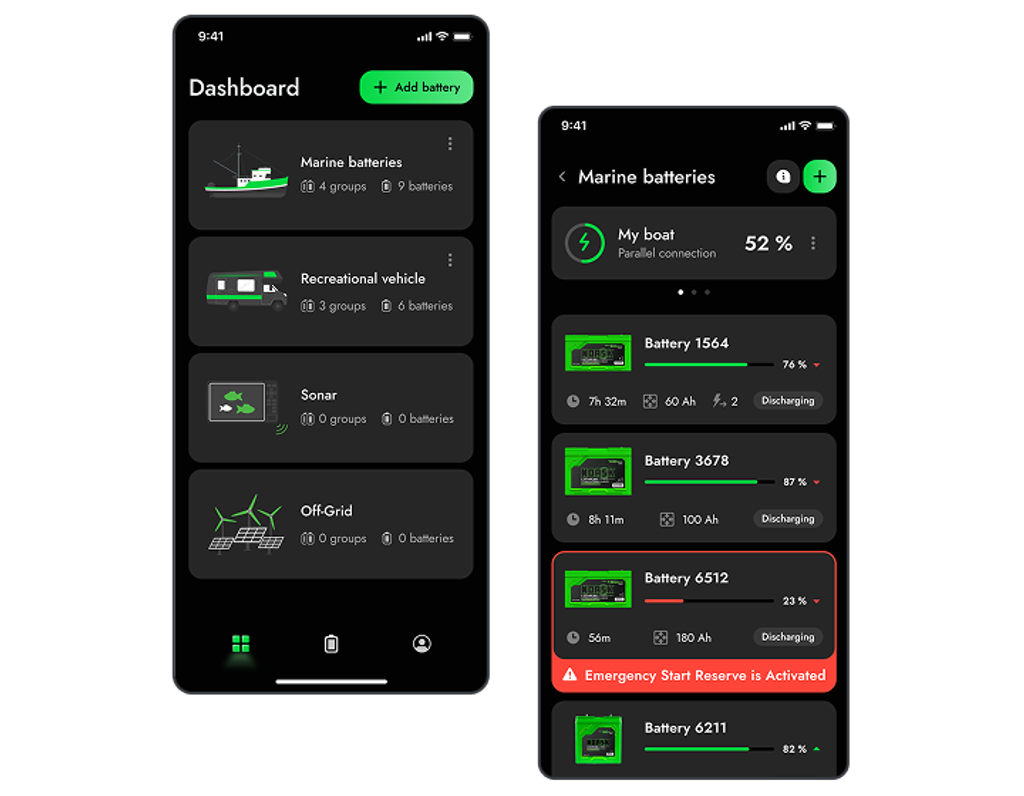
Norsk app by Stormotion
OCPI Architecture & Consulting
We help you design a solid OCPI integration before writing a single line of code. We determine your role (CPO, eMSP, or Platform/Hub), define which modules you need, and figure out the best way to connect everything with your existing CPMS or backend.
Analysis of your current architecture and roaming readiness
Choosing the right protocol version (2.1.1, 2.2.1, etc.) and connection model (peer-to-peer or via hub)
Practical recommendations on security, error handling, and scalability
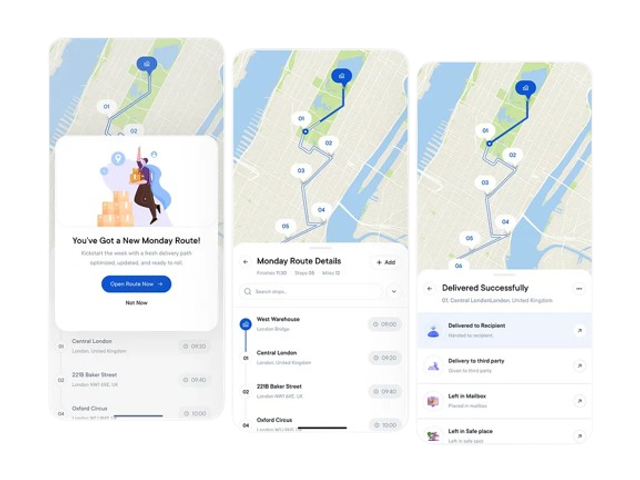
image by Azmir Sheikh
OCPI Implementation for eMSP & Driver Apps
We build and implement full OCPI integration into your mobile and web applications so your users can find, authorize, and charge at partner networks without friction.
Real-time locations, charger status, and tariffs
Token authorization and remote start/stop sessions
Session handling, CDRs, and billing calculations
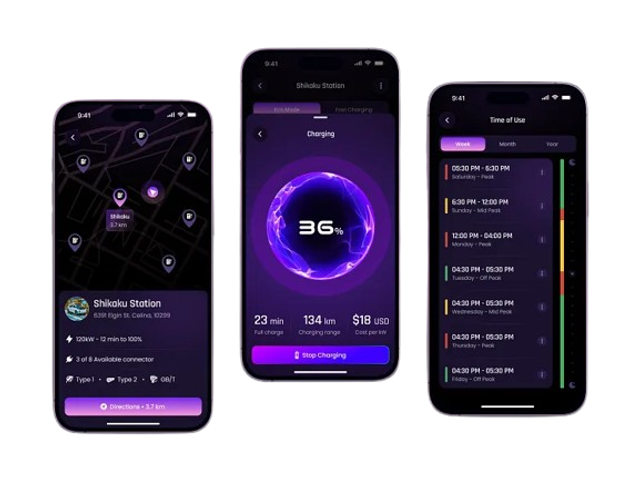
image by Fahad Ibn Sayeed
OCPI for CPO & Network Operators
We help you open your charging network to external eMSPs by exposing your locations, accepting authorizations, generating CDRs, and handling commands.
Publishing Locations, Tariffs, and real-time status updates
Processing incoming Commands (remote start/stop, reservations)
Reliable CDR generation and validation
Seamless integration with your existing CPMS – no need to replace it
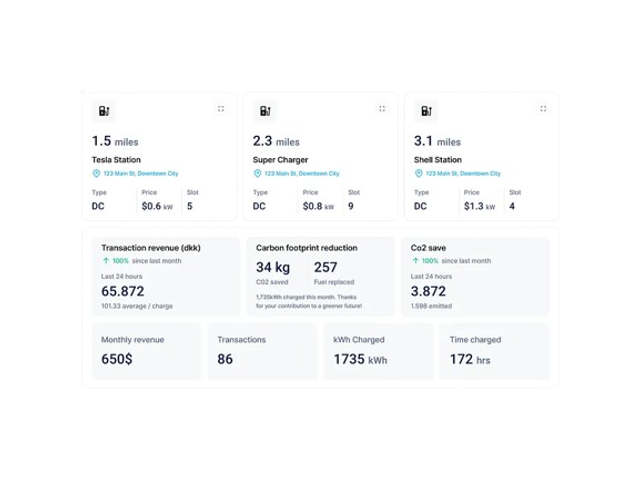
image by Dmitry Sergushkin
Multi-Protocol & Roaming Optimization
When you need to work with multiple partners, different OCPI versions, or hybrid setups (OCPI + OCPP + custom APIs).
Abstraction layer to support several roaming partners cleanly
Handling tricky edge cases around tariffs, statuses, and CDRs
Real interoperability testing with actual partners
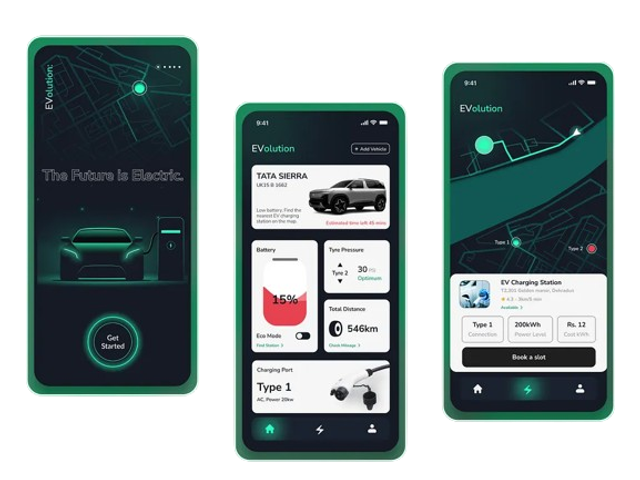
image by Rohit Singh
Reliability, Troubleshooting & Field Support
We diagnose and fix problems that only appear in production – mismatched CDRs, authorization failures, lost sessions, and more.
Deep analysis of logs and traffic between platforms
Testing with real partner environments
Monitoring and alerting for OCPI traffic
Technical Challenges We Solve
OCPI may look like “just another API,” but most headaches happen at the messy intersection of different systems, protocol versions, and business rules.

Inconsistent CDR Generation and Reconciliation
CDRs from different partners often arrive with mismatched energy values, tariffs, taxes, or session timestamps. This leads to billing disputes and a lot of painful manual work. We implement clear validation rules, smart retry logic, and reconciliation tools that automatically match and fix most discrepancies.
Token Authorization and Roaming Edge Cases
Authorization works fine in testing but breaks in production – expired tokens, inconsistent whitelist/blacklist handling, or hub routing issues. We design a robust token lifecycle with proper fallback mechanisms and detailed logging so authorization stays reliable under real-world conditions.
Real-time Location Status Mismatches
A charger shows as “Available” when it’s actually occupied – or the other way around. Users end up with outdated information and frustration. We help set the right push/pull frequencies, smart caching, and conflict resolution between OCPI and your internal CPMS.
Versioning and Backward Compatibility
Partners run on different OCPI versions. What’s required in one version becomes optional in another, and adding a new partner often breaks existing integrations. We build a clean abstraction layer that hides these differences and lets you support multiple versions at the same time.
Cross-Platform / Multi-Party Session Management
A session starts through one partner but the CDR comes from another. Or remote stop commands don’t work. This gets especially tricky with white-label solutions. We create a single session tracking layer that correctly connects data coming from multiple sources.
Error Handling and Resilience
Network failures, timeouts, and invalid payloads are normal in the real world. Without proper handling, your app feels broken to the user. We add idempotency, intelligent retries with exponential backoff, and graceful degradation so the experience stays smooth even when things go wrong.
Tariff Display and Dynamic Pricing Complexity
Tariffs can change in real time, include roaming markups, subscription discounts, or time-of-use rules. Showing the user a clear, accurate price is harder than it looks. We help map and cache tariffs correctly so drivers always see transparent and trustworthy pricing.
Our Recent Projects
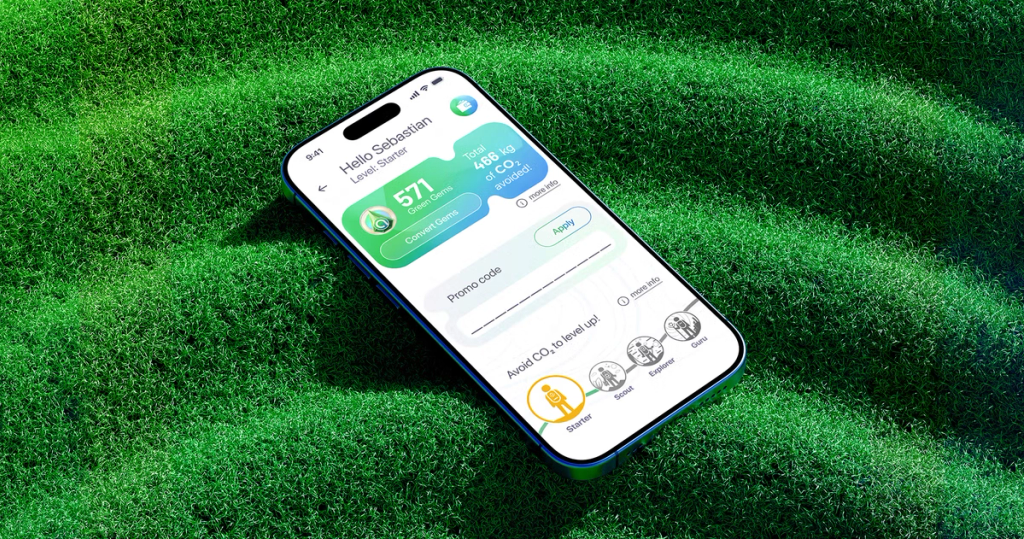
CPO driver app
Atlante is the largest fast-charging network in Southern Europe, with 4,084 charging points in Italy, France, Spain, and Portugal - all powered by 100% green energy. Our EV charging app development firm expanded their white-label app by adding a custom loyalty program in 11 languages.
View case study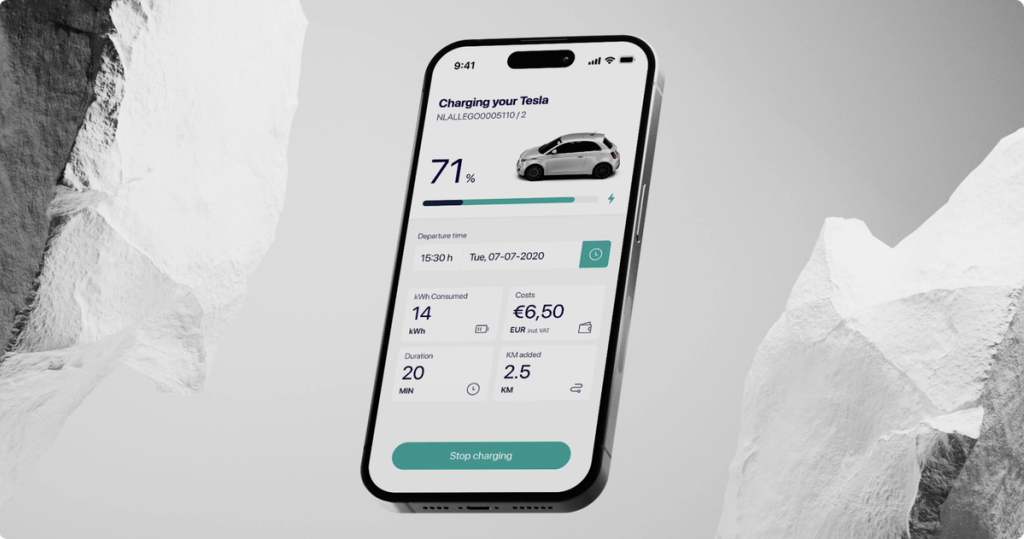
White-label EV charging platform
A Netherlands-based electric mobility platform serving over 40 charging station operator clients across Europe. We modernized a core white-label app that operators use to launch their own branded charging services.
View case study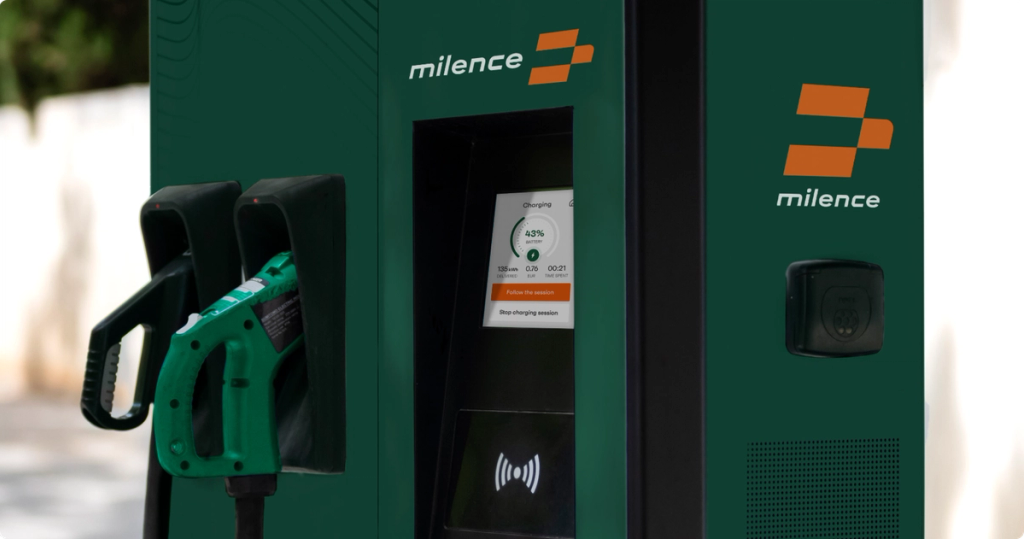
Payment terminal app for EV charging stations
Milence is a European truck charging network. A joint venture between Daimler Truck, Volvo, and the TRATON Group, creating Europe’s first large-scale charging network for heavy-duty trucks. We developed an app for Android terminals for their payment stations - from scratch, passing supplier security testing - in 8 European countries.
View case studyTestimonials



"We originally got in touch with Stormotion from our original app developer. And very soon we found real value in choosing Stormotion, because they previously had real valuable experience on the field – digital apps working in the realm of EV charging. So, it was really a no-brainer for us to to go with them."


"Stormotion stood out because of their focus on Bluetooth-connected products. They weren't just app developers, they understood the unique challenges of building mobile app experience for hardware products. Their collaborative approach, technical expertise, and ability to quickly grasp the vision of the North Guardian app made it clear that they were the right fit."


"I had meetings with 30 different agencies and the team at Stormotion gave me the most confidence to go forward. With them you feel like you've got a kind, knowledgable & conscientious team behind you. So I was 100% sure that they're going to be able to deliver our project!"


"If you're thinking of going to Stormotion, you're going to have a very easy team to talk to, to communicate with, to understand what you want to do. They will tell you if you're barking up the wrong tree and are going to waste your time and money. I'd say "give it a go!" and I thoroughly recommend Stormotion."


"Trust Stormotion. Work with them on your road map, on your technical debt. Also, expect feedback because the team is eager to do this. It's what I value and, I think, many startups value."


"Given a tough budget and a lack of knowledge in our own engineering team, we quickly came to Stormotion. We had already worked together on previous projects, and I knew that, based on React Native, we could have one engineer responsible for it. That was just amazing because I could really focus on our customer side, knowing that the mobile application for the testers was in very good hands."
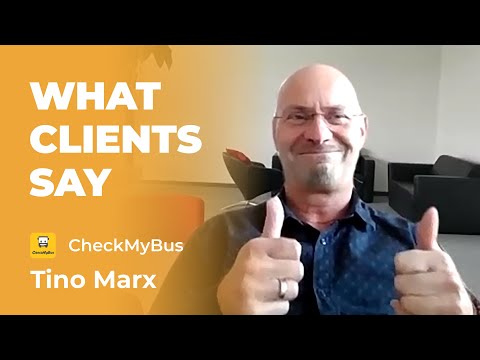

"I highly recommend Stormotion as a service provider for app development. They're young, flexible, dynamic, creative and very fast. The cost of planning and implementation is also reasonable. As they use "pay as you go", have a good plan first – then the result also will be satisfactory."


"The Stormotion team quickly became our team for everything Native app-related. It would be hard to name all the things that we built over the many years we worked together, but overall, I think we had a good partner who was able to adapt the way we worked, and the way they worked. So that we could ultimately build a product that had the quality that we wanted and with the speed that we wanted."


"Working with Stormotion was a blast! The Project Managers, and especially Alex, are always there for you when you need them to go the extra mile. And it's very easy to communicate with them. Whether it's something urgent or whether it's a bigger task, like building the structure of the architecture, I always felt like I was treated very well. Stormotion delivered a great app experience from day one."
Technologies
Backend & Integration
Mobile development
Monitoring, Testing & Reliability

React Native
Swift

Kotlin

Expo

GraphQL


Our Collaboration Models
Pre-Project
Discovery Stage
Planing
Agile Development
UX-Prototyping
Design
Development
QA & Testing
Transition
Maintenance
Handover
Next Iteration
You get complete ownership of the OCPI integration – from architecture to production-grade reliability. We take full technical responsibility for the entire solution and deliver it ready to run.
This model typically includes:
- OCPI architecture design and roadmap
- Full implementation (eMSP, CPO, or both sides)
- CDR reconciliation, token management, and edge-case handling
- Thorough testing and interoperability checks
- Post-launch monitoring, support, and ongoing optimizations
Our Development Process


FAQ
Can you integrate OCPI if we already have our own CPMS or billing system?
Yes. We almost always work on top of your existing infrastructure. We don’t replace your CPMS or billing system – we simply add a reliable OCPI layer on top, taking all its limitations and specifics into account.
How long does a typical OCPI integration take?
Usually between 8 and 14 weeks, depending on the complexity – number of partners, legacy systems, white-label requirements, and whether mobile integration is involved. We can deliver a Proof of Concept with a key partner in 2–3 weeks.
Which OCPI versions do you support?
Our main focus is OCPI 2.2.1 – it’s currently the most stable and widely used. We also have strong experience with 2.1.1 and can help you migrate to newer versions when needed.
How do you handle CDR reconciliation issues?
This is one of the most common pain points in roaming. We build solid validation rules, retry mechanisms, detailed logging, and reconciliation tools that automatically resolve most mismatches. We also help you set up clear processes so any remaining discrepancies are handled quickly and without drama.
Do you work with hubs (like Hubject or Gireve) or only peer-to-peer?
We work with both. We have solid experience with direct peer-to-peer connections as well as integration through major European and international hubs.
What if we have a white-label product and each client needs their own roaming partners?
This is one of our strong suits. We design the architecture so the core OCPI logic stays centralized, while partner configuration and branding stay client-specific. This lets you scale efficiently without the codebase becoming a mess.
How do you test the integration before going live?
We test thoroughly using partner sandboxes, real test accounts, and our own simulators. We run full end-to-end flows – authorization, session, and CDR – plus interoperability tests. When needed, we also organize joint testing sessions with your future partners.
Do you provide support after launch?
Absolutely. After go-live we provide a monitoring period, fast response to any production issues, and ongoing help with adding new roaming partners.

Pauline Gugelot
Product Owner @ Milence
"Stormotion has really delivered on their promises. They’ve been very transparent about their progress, flexible in reacting to changes, and solution-focused in overcoming challenges. If they didn’t know something, they would find out, which gave us great confidence in their ability to go the extra mile."