
Why EV & eMobility Teams Choose Us Over Generic App Agencies
-
9+ Years in EV – Domain Experience from Day One
-
Built for the Field, Not Just the Spec Sheet
-
Driver Journeys People Actually Want to Use
-
Software Built Around Your Commercial Model
Contact us
Why Clients Choose Us – Our EV Domain Advantage
We originally got in touch with Stormotion through our original app developer. Very soon we saw the real value in working with them — they already had solid, hands-on experience building digital apps in the EV charging space. For us, it was a no-brainer to go with Stormotion.

Scoping That Starts with Your EV Stack
Before we estimate, we ask which CPMS you use, which OCPI version your partners support, who handles roaming, and where the business logic lives. These answers affect the scope far more than the number of screens. We build on your existing infrastructure instead of proposing a rewrite you do not need.
Roaming and Multi-Network Sessions
A session that starts on your network and settles on someone else’s is where many EV products quietly fail. We have built cross-provider sessions, eRoaming, backend switching, and recovery flows for live networks – including the failure states that rarely make it into the original specification.
Payments, Tariffs and Invoicing That Stay Consistent
EV payments are not a standard checkout. Pre-authorisation, incremental reservation, RFID and guest flows, roaming surcharges, subscriptions, and country-specific card behaviour all affect the charging session. We keep pricing consistent across the map, session screen, terminal, receipt, and invoice by running them from the same underlying logic.
Complex Logic Behind EV Operations
EV products often serve more than individual drivers. We design for fleet drivers, organisational units (OUs), corporate and personal accounts, vehicle relationships, access roles, charging allowances, shared payment methods, cost allocation, and invoicing hierarchies. These relationships are planned as part of the product architecture rather than added later as exceptions.
Driver Journeys That Support Business Growth
Drivers open a charging product because they need to charge, not because they want another app. We reduce friction from charger discovery and price confirmation to session start, payment, error recovery, and repeat use. The result reduces abandoned sessions and support friction while helping the business increase completed charging sessions, repeat use and energy sales.
Software Beyond the Driver App
We build across the EV product ecosystem: driver apps, native Android payment-terminal software, charging kiosks, operator portals, fleet dashboards, and support tools. We also work with additional driver touchpoints such as QR-based charging flows, App Clips, CarPlay, and Android Auto.
Built to Scale Across Brands and Markets
We separate the shared product core from brand and market configuration, so every new operator or country does not require a new codebase. Branding, languages, currencies, payment methods, tariffs, regulatory restrictions, and roaming differences can be handled through configuration, while market-specific charging behaviour is considered from the architecture stage. This enables shared releases, a more efficient QA process, and faster expansion into new markets.
When EV Teams Come to Us
1
Your White-Label or OEM App Has Hit Its Ceiling
The interface looks like everyone else’s, the features you need aren’t on the vendor’s roadmap, and your data stays on their side. We replace it with a product you control.
2
The Last Vendor Delivered Screens, Not a Charging Product
It demos well. Then roaming sessions fail, pre-authorisations hang, and nobody can explain why. We take over projects like this – first we find what’s actually broken, then we fix it.
3
You’re Adding a Surface Your Team Has Never Built
A payment terminal, an operator portal, CarPlay and Android Auto, a second brand, or a new country. We’ve shipped each on live EV products, so your first version isn’t the learning version.
4
You Need to Rebuild Without Disrupting Live Drivers
Existing users, backend dependencies, operations that can’t pause. We start with a feature-parity audit, agree what belongs in V1, and release in stages to minimize disruption for drivers and operations.
What We Build for EV Charging & eMobility Teams
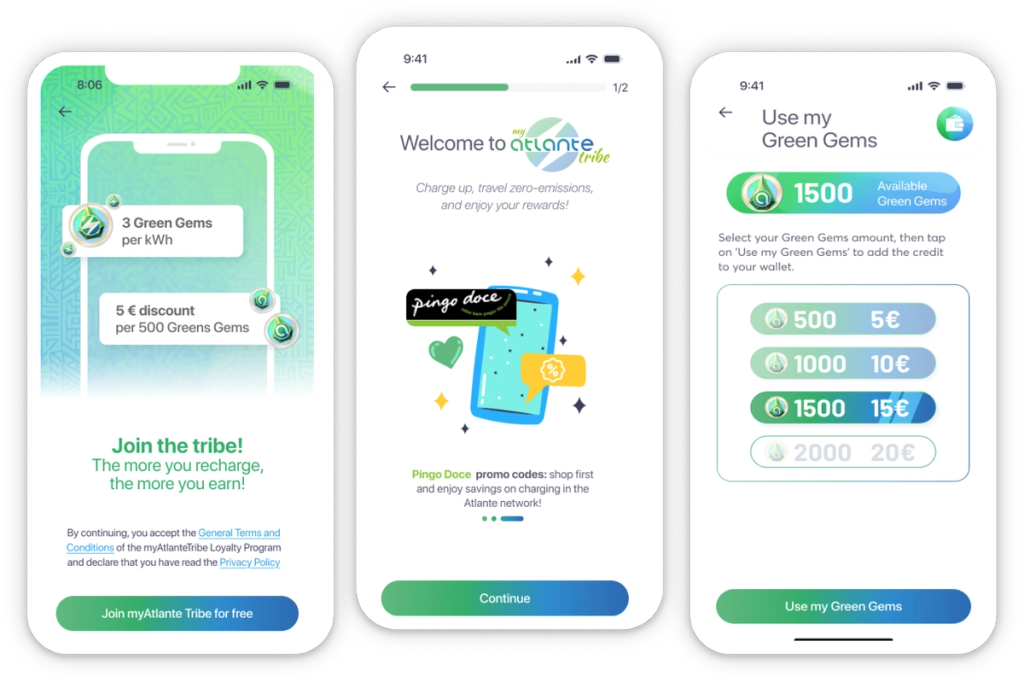
image by Stormotion
Branded CPO and Operator Driver Apps
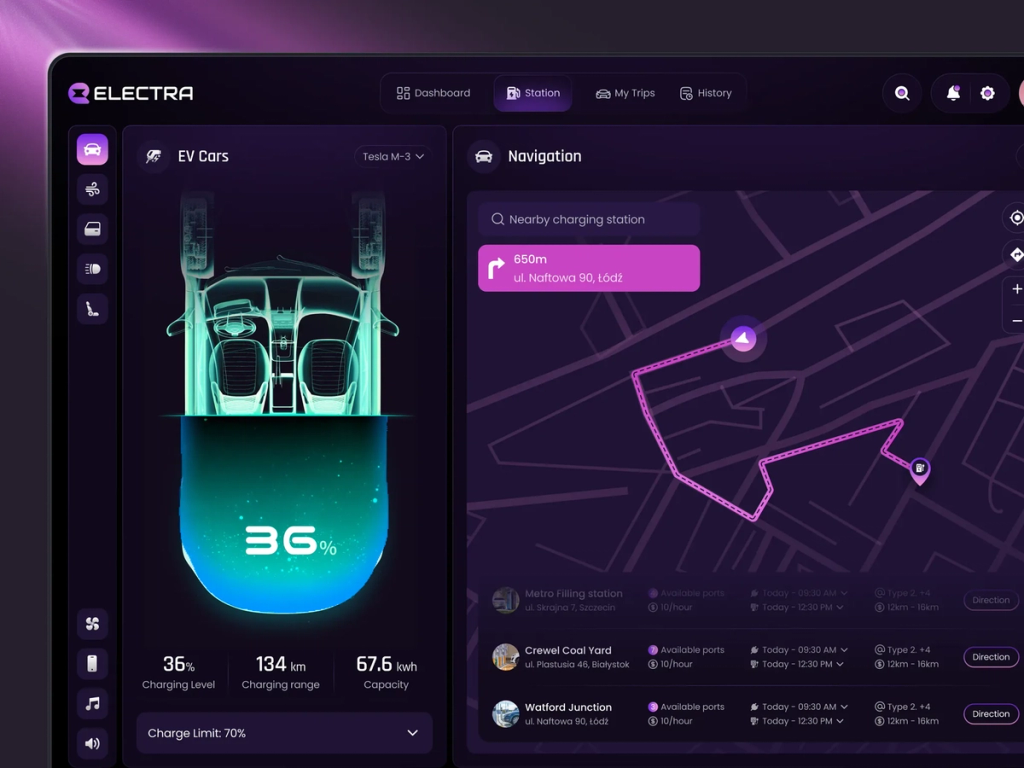
Most CPO apps eventually reach a point where the basic white-label version is no longer sufficient: the user interface looks generic, the backend is outdated, and it’s not possible to add the features the business actually needs. We provide EV charging app development services to redesign and modernize charging apps for drivers and operators who already have infrastructure, users, and workflows that they cannot afford to disrupt.
Charging session flows
Map with real-time charger availability and filter
Tariff display, session history, and in-app billing
OCPI/OCPP backend integration and roaming support
design by Nasir Uddin
eMSP and Multi-Network Charging Apps
Drivers don't want five apps for five charging networks. We build eMSP products that combine multiple operators, tariffs, payment methods, and backend systems into one consistent journey, including in-car and low-friction charging experiences.
Multi-network maps with real-time charger availability
eRoaming and cross-provider session management
Cross-network tariff, subscription, and payment logic
QR charging, App Clips, CarPlay, and Android Auto
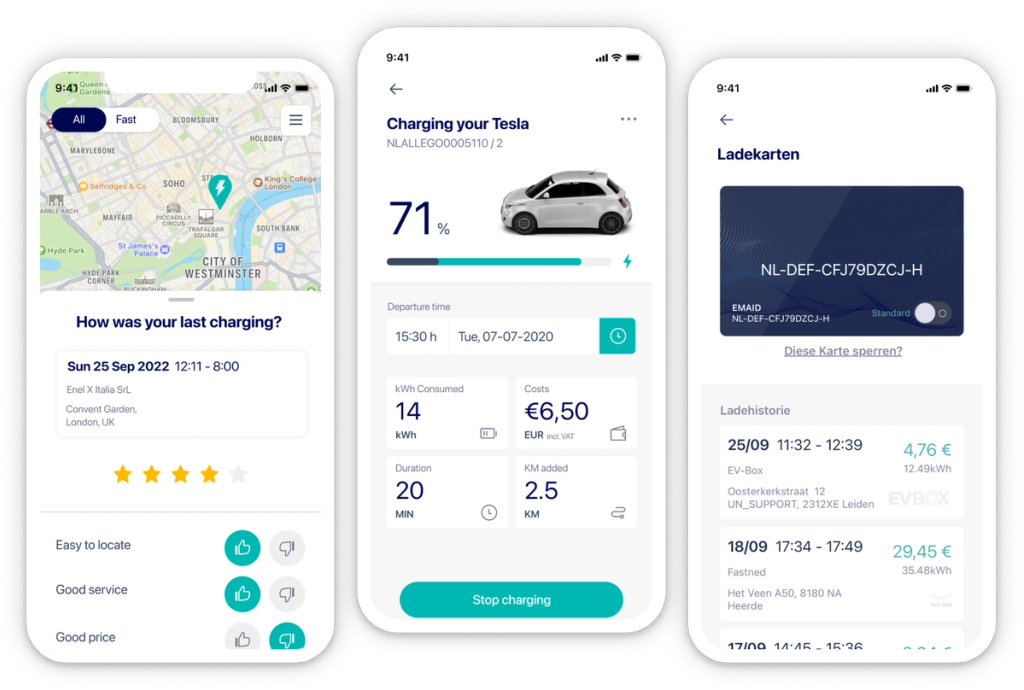
image by Stormotion
Multi-Brand and Multi-Market EV Products
We separate the shared product core from brand and market configuration, so every new operator, brand, or country does not require another repository. The same architecture can support differences in branding, languages, currencies, payment methods, restrictions, and roaming relationships.
Shared product core with brand- and market-level configuration
SDK extension and customization within existing frameworks
CMS for client-specific content, campaigns, and loyalty
Shared releases across brands without codebase sprawl
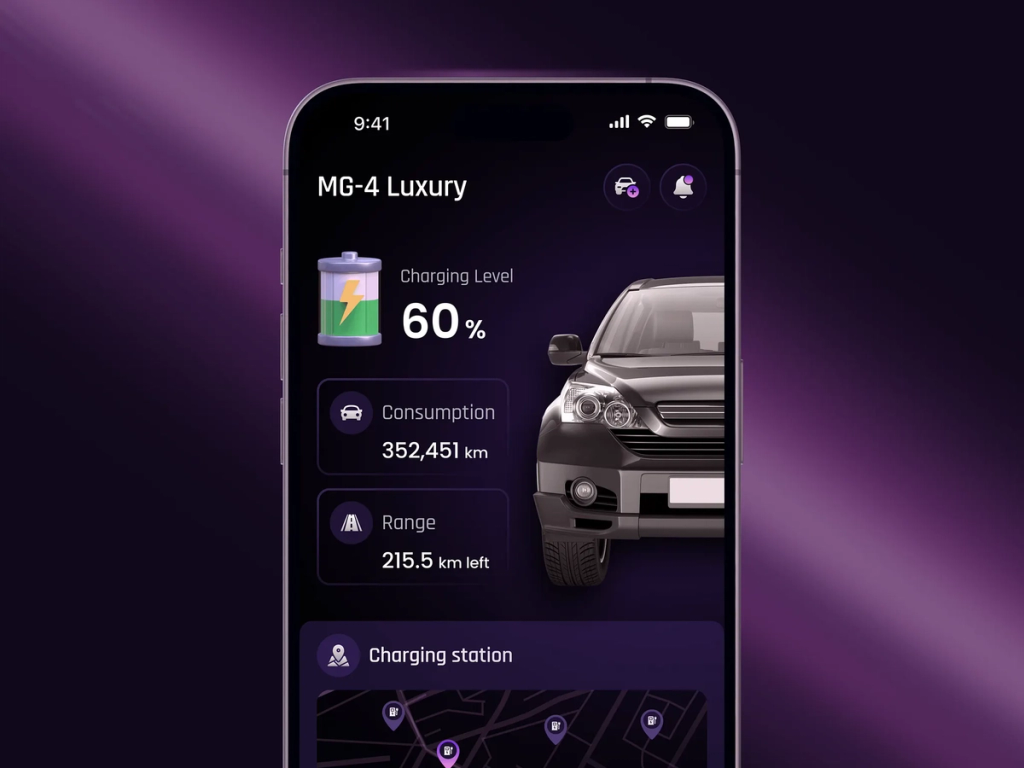
image by Musemind Mobile
Public, Home, and Workplace Charging Apps
Public, home, and workplace charging require different access rules, pricing models, devices, and user roles. We build products that support all three through a shared account and session model without treating any context as a secondary addition.
Public charging with maps, roaming, and guest payments
Home charging with device pairing and scheduled charging
Workplace charging with access control and cost allocation
Shared account, vehicle, payment, and session logic
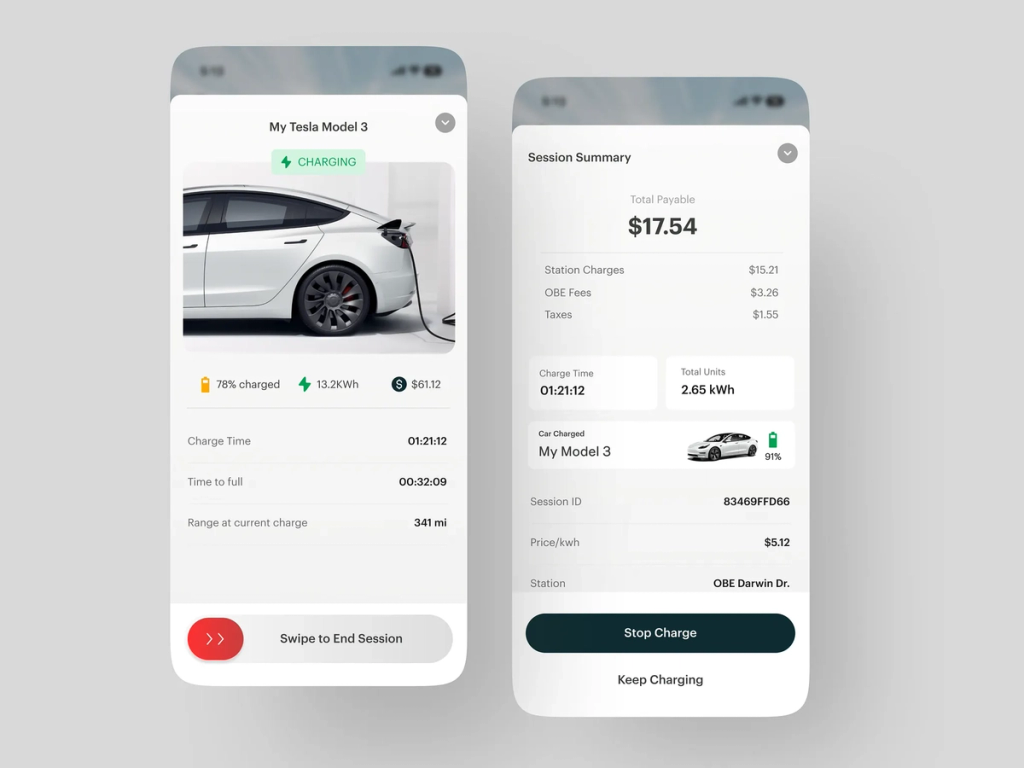
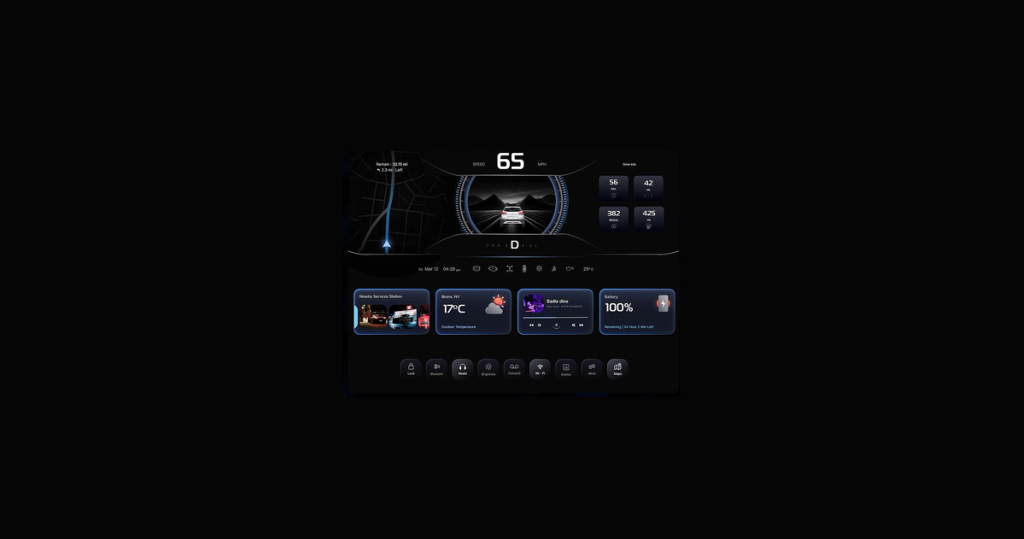
image by Ajay Shekhawat
EV Products with Complex Tariff, Subscription, and Payment Logic
A charging session may combine energy- and time-based rates, roaming surcharges, subscriptions, corporate allowances, or loyalty discounts. We keep pricing consistent across the map, session screen, terminal, receipt, payment history, and invoice.
Dynamic tariffs, subscriptions, access rules, and usage limits
Cards, mobile wallets, RFID, and pre-authorisation
Incremental reservation and payment recovery flows
Discounts, corporate cost allocation, receipts, and invoicing
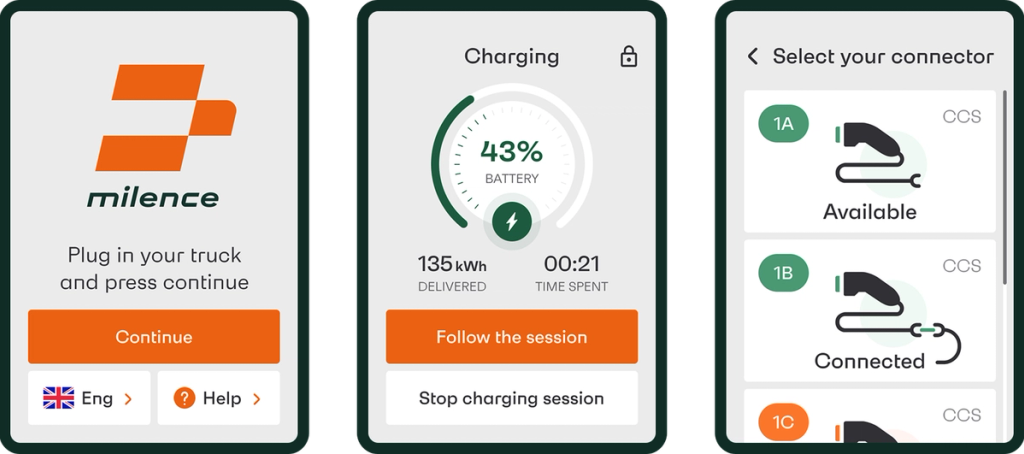
image by Stormotion
Android Kiosk and Payment Terminal Apps
Payment terminals bring constraints that standard mobile apps do not: small screens, limited colors, older Android versions, restricted performance, and lengthy vendor approvals. For Milence, we built native Android software for Worldline Valina terminals, passed NDT security testing, and supported deployment across eight countries.
Native Android apps for payment terminals and kiosks
Card, RFID, pre-authorisation, and incremental reservation flows
UI designed around hardware and performance limitations
Vendor compliance, certification, and security testing
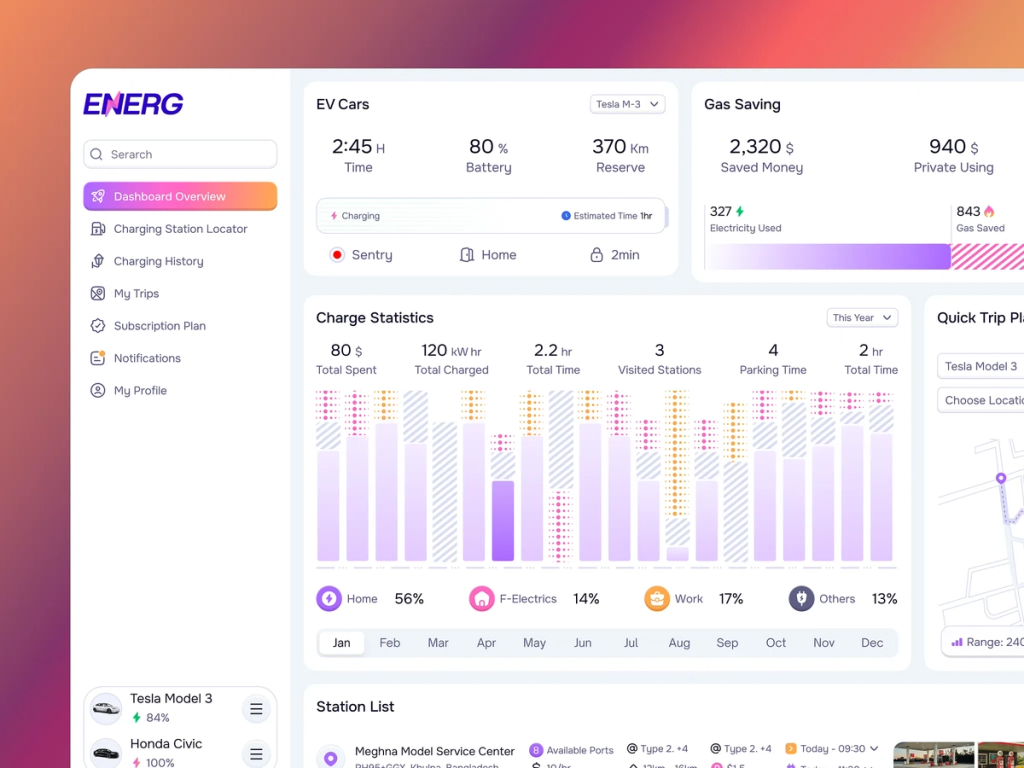
image by Rakibul 🏀
Driver Apps, Operator Portals, and Back-Office Products
When driver apps and operational tools are built separately, permissions, session data, tariffs, and billing logic quickly become inconsistent. We develop them around a shared data and business-logic layer that connects drivers, fleets, corporate accounts, support teams, and operators.
Connected driver flows, portal permissions, and access logic
Fleet drivers, organizational units, and account hierarchies
Cost allocation, corporate billing, and invoicing
Station monitoring, tariff management, support, and reporting
Our Recent EV Projects
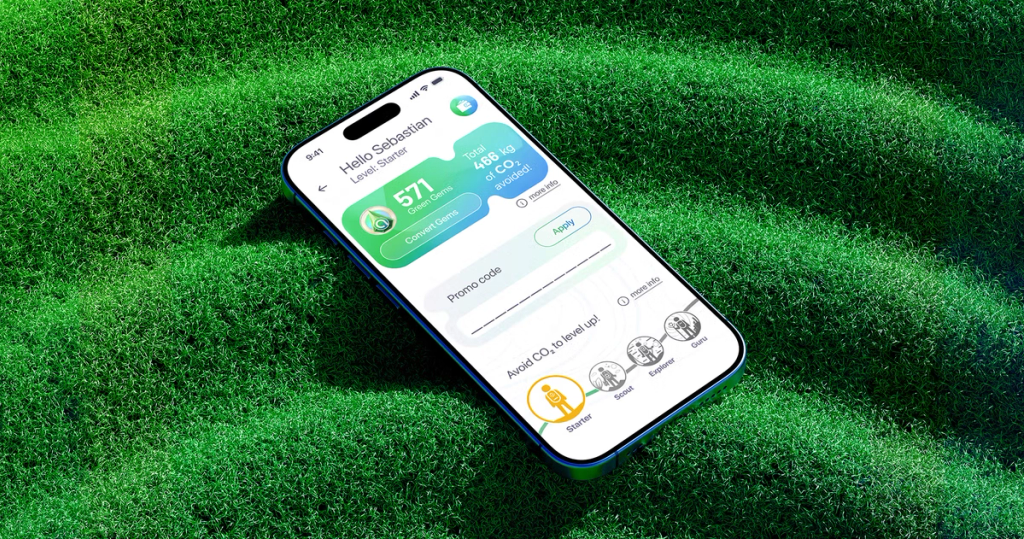
CPO driver app
Atlante is the largest fast-charging network in Southern Europe, with 4,084 charging points in Italy, France, Spain, and Portugal - all powered by 100% green energy. Our EV charging app development firm expanded their white-label app by adding a custom loyalty program in 11 languages.
View case study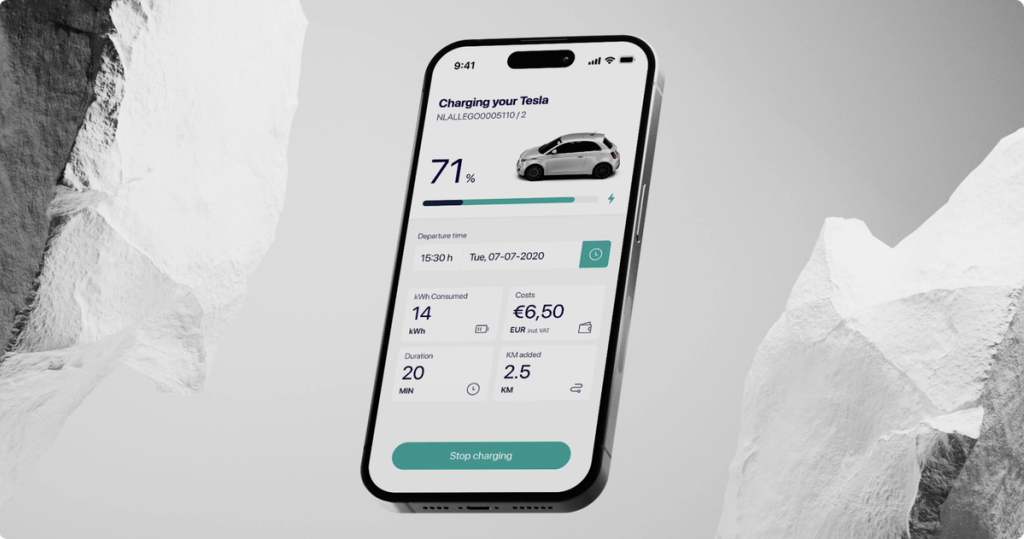
White-label EV charging platform
A Netherlands-based electric mobility platform serving over 40 charging station operator clients across Europe. We modernized a core white-label app that operators use to launch their own branded charging services.
View case study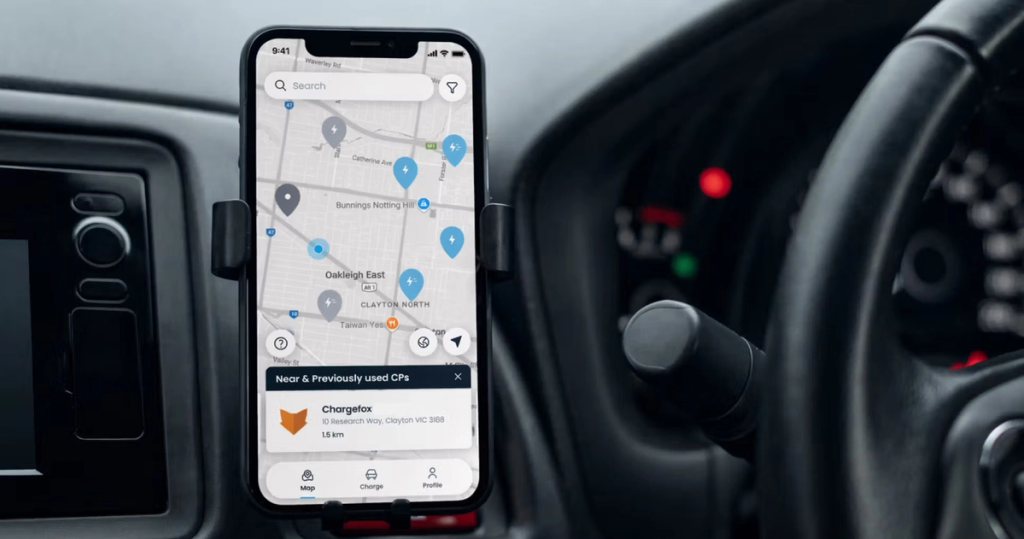
EV charging app
zuup is an Australian eMobility company that wanted a single app for EV drivers to find, charge, and pay across multiple public charging networks. We built the cross-platform zuup Roam app from scratch, integrating a third-party backend for roaming while focusing on real driver needs — simple onboarding, map-based station discovery with live availability and pricing, session controls, and Stripe payments.
View case study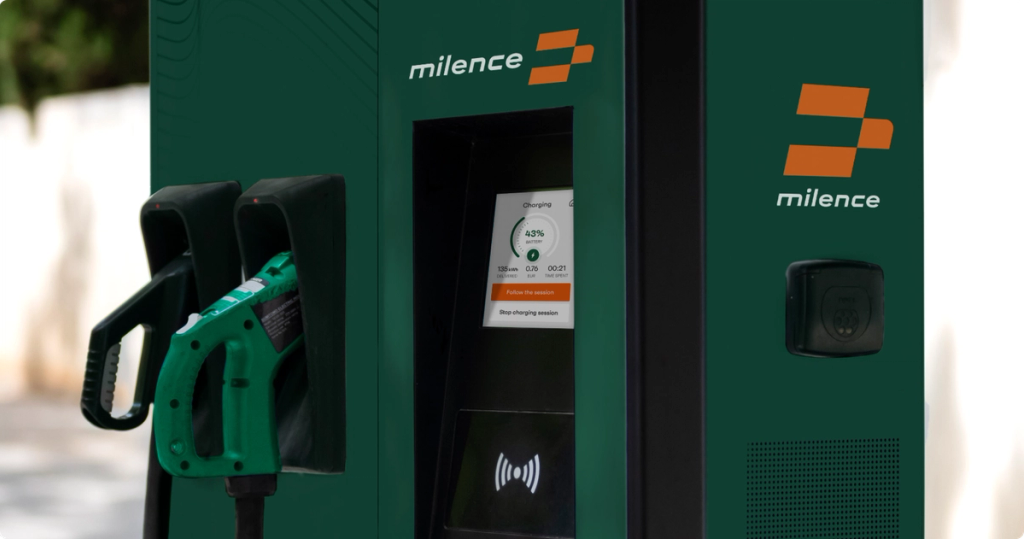
Payment terminal app for EV charging stations
Milence is a European truck charging network. A joint venture between Daimler Truck, Volvo, and the TRATON Group, creating Europe’s first large-scale charging network for heavy-duty trucks. We developed an app for Android terminals for their payment stations - from scratch, passing supplier security testing - in 8 European countries.
View case study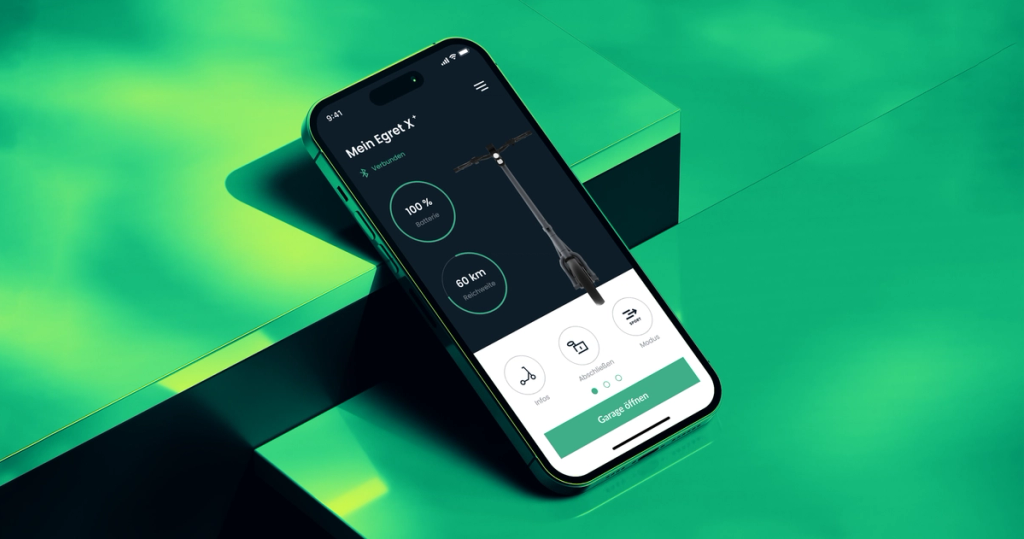
E-scooter companion app
Egret produces premium e-scooters. They required an application that would be compatible with various scooters with different BLE protocols. We rebuilt their React Native app with custom native modules, solving OTA update delays (reduced from 5 minutes) and enabling stable communication with different hardware variants.
View case studyWhat Our Clients Say About Us



"We originally got in touch with Stormotion from our original app developer. And very soon we found real value in choosing Stormotion, because they previously had real valuable experience on the field – digital apps working in the realm of EV charging. So, it was really a no-brainer for us to to go with them."


"Stormotion stood out because of their focus on Bluetooth-connected products. They weren't just app developers, they understood the unique challenges of building mobile app experience for hardware products. Their collaborative approach, technical expertise, and ability to quickly grasp the vision of the North Guardian app made it clear that they were the right fit."


"I had meetings with 30 different agencies and the team at Stormotion gave me the most confidence to go forward. With them you feel like you've got a kind, knowledgable & conscientious team behind you. So I was 100% sure that they're going to be able to deliver our project!"


"If you're thinking of going to Stormotion, you're going to have a very easy team to talk to, to communicate with, to understand what you want to do. They will tell you if you're barking up the wrong tree and are going to waste your time and money. I'd say "give it a go!" and I thoroughly recommend Stormotion."
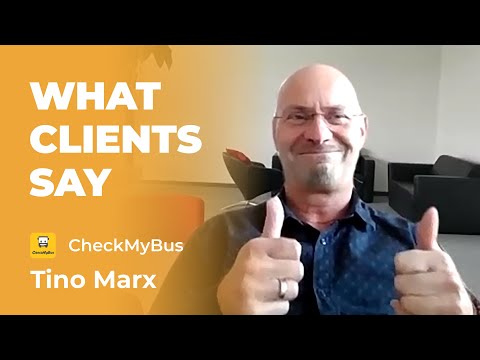

"I highly recommend Stormotion as a service provider for app development. They're young, flexible, dynamic, creative and very fast. The cost of planning and implementation is also reasonable. As they use "pay as you go", have a good plan first – then the result also will be satisfactory."


"The Stormotion team quickly became our team for everything Native app-related. It would be hard to name all the things that we built over the many years we worked together, but overall, I think we had a good partner who was able to adapt the way we worked, and the way they worked. So that we could ultimately build a product that had the quality that we wanted and with the speed that we wanted."


"Given a tough budget and a lack of knowledge in our own engineering team, we quickly came to Stormotion. We had already worked together on previous projects, and I knew that, based on React Native, we could have one engineer responsible for it. That was just amazing because I could really focus on our customer side, knowing that the mobile application for the testers was in very good hands."


"Trust Stormotion. Work with them on your road map, on your technical debt. Also, expect feedback because the team is eager to do this. It's what I value and, I think, many startups value."


"Working with Stormotion was a blast! The Project Managers, and especially Alex, are always there for you when you need them to go the extra mile. And it's very easy to communicate with them. Whether it's something urgent or whether it's a bigger task, like building the structure of the architecture, I always felt like I was treated very well. Stormotion delivered a great app experience from day one."
How We Collaborate
Pre-Project
Discovery Stage
Planing
Agile Development
UX-Prototyping
Design
Development
QA & Testing
Transition
Maintenance
Handover
Next Iteration
We take ownership from product discovery and architecture to design, development, integrations, QA, and release. This setup works when you need to launch a new EV product, replace a limiting white-label solution, or modernize a live platform without building a complete internal delivery team.
Best for:
- New CPO, eMSP, white-label, or multi-context charging products
- Major app modernization or staged platform rebuilds
- New terminals, portals, or additional product surfaces
- Teams that need product, design, and engineering under one setup
How We Typically Start


FAQ
Can you work with our existing CPMS, backend, or white-label platform?
Yes. We usually begin by understanding your CPMS, supported OCPI and OCPP flows, roaming partners, payment providers, SDKs, and ownership of the business logic. We build on top of systems that already work instead of recommending a rewrite simply because the documentation or architecture is difficult for outsiders. When modernization is needed, we identify which parts should stay, be extended, or be replaced in stages.
Can you modernize a live charging app without disrupting existing drivers?
Yes. We start with a feature-parity, dependency, and integration audit to understand what the current product supports and what cannot stop during migration. We then define the first release and move functionality in controlled stages rather than replacing everything at once. The release plan accounts for active drivers, backend dependencies, support processes, and operational workflows.
Do you have experience with roaming and multi-network charging?
Yes. We have worked with cross-provider charging sessions, eRoaming, backend switching, tariff synchronization, and the failure states that appear on live networks. We look beyond the mobile interface and trace the session across the app, backend, roaming providers, payment systems, and settlement logic. This is important because many multi-network problems only become visible outside the happy path.
Can you handle complex EV charging payments and tariff logic?
Yes. We work with pre-authorisation, incremental reservation, cards, mobile wallets, RFID, guest charging, subscriptions, roaming surcharges, discounts, receipts, and invoicing. We structure the logic so the price remains consistent across the map, session screen, terminal, payment history, and invoice. We also account for country-specific payment behaviour, corporate allowances, and cost-allocation rules.
Can you build a white-label product for several brands and markets?
Yes. We separate the shared product core from brand- and market-specific configuration, so adding a new operator or country does not require creating a separate repository. Branding, content, languages, currencies, payment methods, restrictions, and roaming relationships can be handled at the configuration level. This enables shared releases and QA while still supporting meaningful differences between clients and markets.
Do you build more than driver-facing mobile apps?
Yes. We build native Android software for payment terminals and kiosks, operator portals, fleet dashboards, support tools, and other back-office products. For Milence, we developed software for Worldline Valina terminals, supported the payment flow from pre-authorisation to session completion, passed NDT security testing, and supported deployment across eight countries. We can connect consumer and operational surfaces through a shared data and business-logic layer.
How do you estimate an EV charging product?
We do not estimate an EV product only by counting screens. The scope depends heavily on your CPMS, protocols, roaming model, payment providers, existing SDKs, user roles, markets, and ownership of the backend logic. We usually begin with a focused technical and product review, then recommend discovery, an audit, a proof of concept, or a staged delivery plan depending on the level of uncertainty.

Pauline Gugelot
Product Owner @ Milence
"Stormotion has really delivered on their promises. They’ve been very transparent about their progress, flexible in reacting to changes, and solution-focused in overcoming challenges. If they didn’t know something, they would find out, which gave us great confidence in their ability to go the extra mile."