AI-Accelerated App Development Company
We build mobile, web, and connected product apps with AI agents. Even if you use AI coding tools internally, the dev part stays with us: we take responsibility for the result, support it, adapt to changes, keep up with what's new in AI, and bring our previous experience.
Let's talk
You Need an Agentic Development Partner If…
1
You want to visualize the app before building it
Instead of a whiteboard session, you can describe us your app idea, and we produce first rough prototypes in HTML/CSS or in Figma via Figma MCP. Sometimes agents can combine your ideas with their own and suggest a direction our team wouldn't reach alone.
2
Your product idea is still vague
Vague ideas used to stay on the shelf. Now we can set aside a token budget for it, describe the idea to agents, and show you several ways to build it. AI only amplifies people here: you decide which one to develop.
3
You need an internal tool without designer involvement
With AI agents, our developers can now build a much better UI than before. For an admin panel, dashboard, or analytics view only your team will use, there's no need to bring in a designer. It's easier and faster for you and a developer to build it together with AI.
4
You're porting, migrating, or rewriting a codebase
Porting means rewriting a product from one platform to another based on what already exists. The existing code is often the main record of how the product works, bugs included, which makes AI a very powerful tool here.
Apps We Build with AI Agents
design by Stormotion
Companion Apps for Connected Products
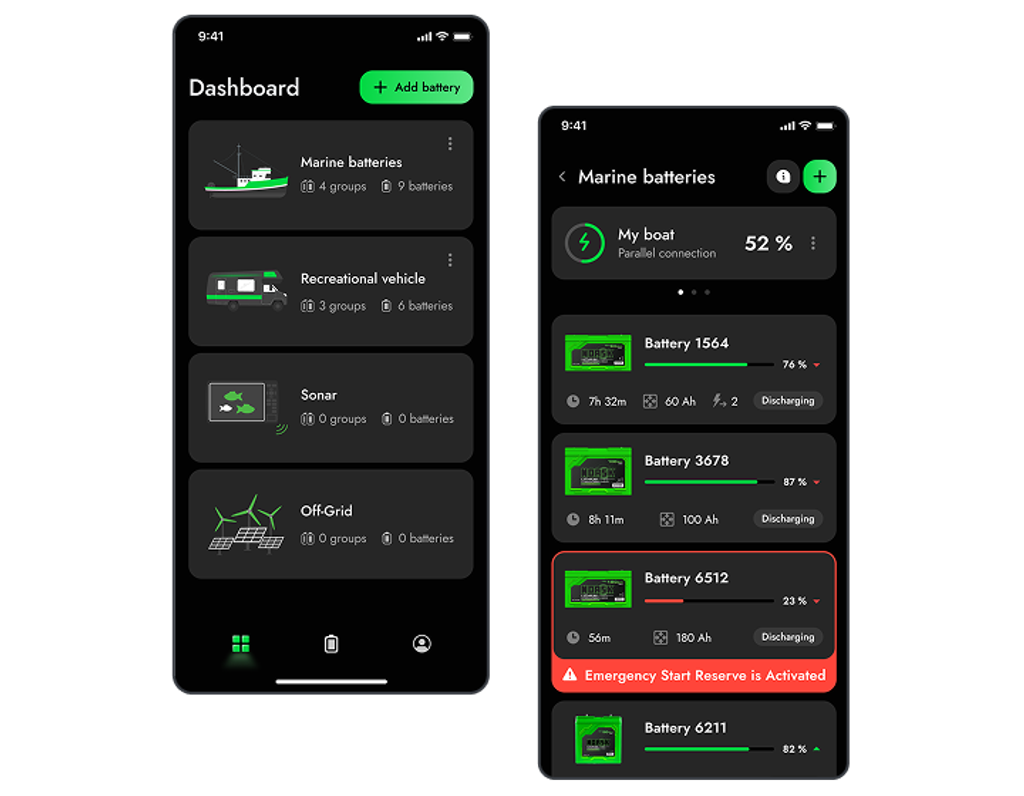
In connected products apps, some feature can be validated only on a real device: run it, collect logs, come back to the computer, and build a new version. This stage is time-consuming and slows down the development process. We use emulation to reproduce specific device scenarios with synthetic sensor data, so agents can test their changes. Real-world testing doesn't disappear, but there's much less of it.
Faster iterations on new features
Repeatable tests for hard-to-reproduce scenarios
Agent self-testing without a physical device at hand
Real-device validation for hardware behavior
design by Stormotion
Cross-Platform Apps with Native Modules
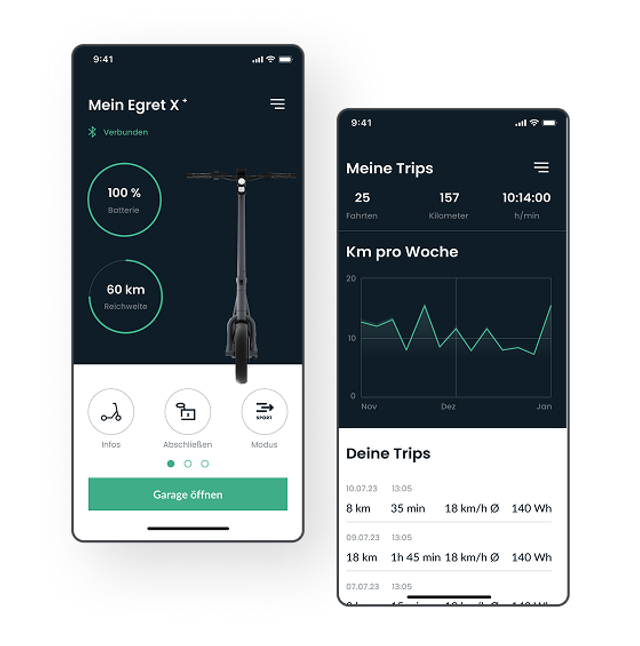
There're cases when your React Native product requires native features no existing library covers. Or you need wearable companion app for your main RN product. Now, you don't need a separate native team, because the experienced engineer that works on your React Native app builds native parts with agentic development. And then, Swift/Kotlin specialist reviews the work.
Custom native modules for React Native and Expo
Wearable companion apps
Platform specialist review
One team for mobile, wearable, and native code
design by Stormotion
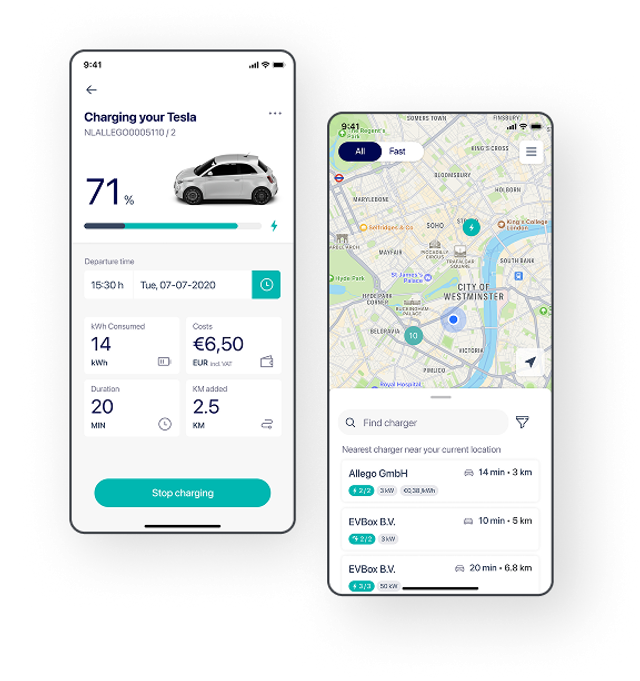
Embedded Android, Kiosk & Terminal Apps
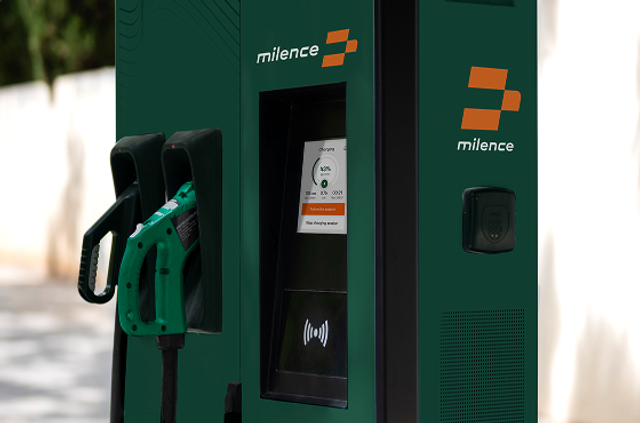
In devices with screens, such as fitness consoles, kiosks, and charging or payment terminals, the app controls the hardware and guides the user through every step. AI agents speed up building and iterating on screens and flows. Our team checks how the app works with the hardware on the real device.
Custom Android console and kiosk apps
Device control and payment integration
UX designed for device screens
design by Stormotion
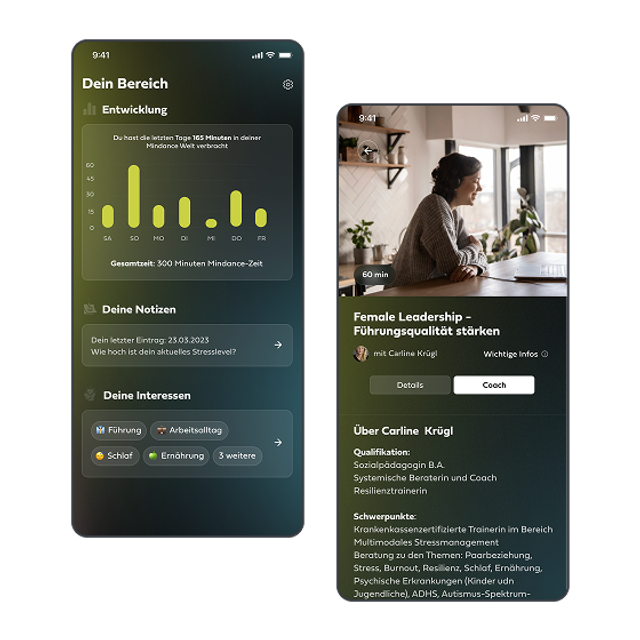
White-Label & OEM App Replacement
Your product or service is premium, but the white-label/OEM app isn't. Every change depends on the vendor, and you have no direct relationship with your users. We replace it with your own branded app, built around your business logic. AI agents speed up development, and our engineers remain responsible for the result, from launch to ongoing updates.
Branded UX that matches your product
Custom features and loyalty logic
Support for your existing devices and protocols
design by Stormotion
Migration & Rewrites of Apps & Websites
Your product is stuck on an outdated framework, and a manual rewrite would take months. For example, an SEO-critical static website had once been migrated manually from Next.js to Gatsby, which took 2–3 months. When Gatsby became outdated, agents orchestrating subagents rewrote the site on Astro in about a week. They checked their work with automated tests and screenshots, while QA and a developer handled the last mile in about two more weeks of polishing.
Test coverage where it's missing
Agent-driven rewrite to a modern framework
Automated tests and screenshot checks
QA and developer review for the last mile
Technical Challenges We Solve
The main strength isn't AI itself. It's agentic development: building a feedback loop where AI can test the results of its own work. And wherever there's a human in the loop, we try to think outside the box and take the person out of that loop, at least partly. We do this everywhere, so that what used to be inefficient with AI becomes efficient. We change processes and tools so AI can work better. What people now call AI native isn't AI native by default. It has to be made that way, and that's exactly what we do.

Slow validation cycles on real devices
Validating new code on a physical device keeps a human in the loop at every iteration. We build an emulated environment on the Unicorn CPU emulator (Python), where the firmware runs just like on the real device and reacts to synthetic sensor data. Subagent orchestration speeds up the work. Synthetic sensor data lets us trigger hard-to-reproduce scenarios right away, instead of waiting hours for the right real-world conditions.
Legacy codebases where the requirements live only in the code
Old code, even buggy one, often holds the requirements for how the product should work. Where coverage is missing, we add automated tests, and agents use them as a fixed reference during the rewrite. The team decides which behavior to keep and which issues to fix.
Tasks across tech stacks
An experienced engineer can now work effectively in an adjacent stack with AI agents, because they already understand how things are built. For example, our mobile developer with no prior Swift experience, built an Apple Watch companion app with AI agents. A Swift specialist reviewed the work.
Domain experience capture
The strongest results come when someone with deep domain knowledge works with agents. Agents multiply expertise, they don't replace it. You bring the domain knowledge, we add engineering and agentic expertise, and agents multiply both. If your domain is new to us, agents help us get up to speed quickly, and we check key decisions with your domain expert.
Our Industries

Fitness
Learn more
IoT & Connectivity
Learn more
EV & EMSP
Learn more
Healthcare & Mental Health
Learn moreTestimonials



"I had meetings with 30 different agencies and the team at Stormotion gave me the most confidence to go forward. With them you feel like you've got a kind, knowledgable & conscientious team behind you. So I was 100% sure that they're going to be able to deliver our project!"


"Stormotion has really delivered on their promises. They’ve been very transparent about their progress, flexible in reacting to changes, and solution-focused in overcoming challenges. If they didn’t know something, they would find out, which gave us great confidence in their ability to go the extra mile."


"We originally got in touch with Stormotion from our original app developer. And very soon we found real value in choosing Stormotion, because they previously had real valuable experience on the field – digital apps working in the realm of EV charging. So, it was really a no-brainer for us to to go with them."


"If you're thinking of going to Stormotion, you're going to have a very easy team to talk to, to communicate with, to understand what you want to do. They will tell you if you're barking up the wrong tree and are going to waste your time and money. I'd say "give it a go!" and I thoroughly recommend Stormotion."


"Trust Stormotion. Work with them on your road map, on your technical debt. Also, expect feedback because the team is eager to do this. It's what I value and, I think, many startups value."


"Given a tough budget and a lack of knowledge in our own engineering team, we quickly came to Stormotion. We had already worked together on previous projects, and I knew that, based on React Native, we could have one engineer responsible for it. That was just amazing because I could really focus on our customer side, knowing that the mobile application for the testers was in very good hands."


"I highly recommend Stormotion as a service provider for app development. They're young, flexible, dynamic, creative and very fast. The cost of planning and implementation is also reasonable. As they use "pay as you go", have a good plan first – then the result also will be satisfactory."


"The Stormotion team quickly became our team for everything Native app-related. It would be hard to name all the things that we built over the many years we worked together, but overall, I think we had a good partner who was able to adapt the way we worked, and the way they worked. So that we could ultimately build a product that had the quality that we wanted and with the speed that we wanted."


"Working with Stormotion was a blast! The Project Managers, and especially Alex, are always there for you when you need them to go the extra mile. And it's very easy to communicate with them. Whether it's something urgent or whether it's a bigger task, like building the structure of the architecture, I always felt like I was treated very well. Stormotion delivered a great app experience from day one."
Technologies We Use
All
AI agents
MCP integrations
Emulation

Claude Code

Cursor

Copilot

Builder.io

Figma

Gmail

Google Drive

Fathom

PM tools

Unicorn
Our Collaboration Models
Pre-Project
Discovery Stage
Planing
Agile Development
UX-Prototyping
Design
Development
QA & Testing
Transition
Maintenance
Handover
Next Iteration
We take full responsibility for product delivery and give you a full-cycle team: full-time engineers working with AI agents, plus a part-time UI/UX designer, QA, and PM. Agents do much of the heavy lifting. Our team stays accountable for the result.
You need this if:
- You're launching a new app and want one team accountable for the result, not just the code
- You're rewriting a legacy app or migrating it to a modern stack
- Your idea is still vague, and you want to see working options before you commit to a full build
Our Agentic Development Process




FAQ
Why hire you if we already have AI coding tools?
The biggest value is responsibility. Think of a car: some people enjoy driving themselves, others hand the wheel to someone responsible for the trip and focus on other things.
Some of our clients already use AI coding tools, for example to build plugins for their websites or optimize processes. But they still leave the main part to us: being responsible for the result, supporting it, adapting to changes, keeping up with what's new in AI, and bringing our experience. That's exactly why clients choose us.
Who controls code quality in agentic app development?
No matter how many subagents are involved, there's always a person at the end. The developer leading the task makes the final call and is responsible for the result, just like without AI.
But we don't pretend the main quality guarantee is someone rereading every line. Quality rests on checks that don't depend on human attention: tests the agent isn't allowed to change and uses as a reference, automated tests and visual screenshot checks, QA in the loop that checks how the product behaves rather than the code, and specialist review when an engineer works outside their main stack.
Human attention moves to what machines can't check: architecture, critical parts of the product, and above all a clear definition of the correct result from the start. It's the same feedback-loop principle: the more checks are automated, the more reliable the result.
Are there projects where you don't use AI?
We use AI across development because it can speed up almost any work. But we follow client, legal, and industry restrictions on AI use, for example in medical products. Where AI is prohibited, we work without it. In some areas we use it partially.
In hardware products, agents do most of the development and testing in an emulated environment, while our engineers make the final check of behavior on the real device. Where there's no objective "correct", like final visuals, brand, or UX feel, AI speeds up exploring options. But the final decision and polish stay with people.
What's the difference between AI-augmented app development and vibe coding?
Verification and accountability. Vibe coding means accepting whatever AI generates as long as it seems to work. Before agents write code, we define what counts as a correct result and the tests that check it. Depending on the work, we use automated tests, including fixed reference tests in migrations, screenshot checks, and QA review of how the product behaves. The final decision belongs to a developer who is responsible for the result and keeps supporting it.
Do you use templates or guidelines for agents?
Instead of static templates, every project gets living agent documentation inside its repository, if the client allows. And we run internal workshops. Git is our source of truth: where possible, we import reports from project management tools and call transcripts there and keep decisions and requirements up to date.
Projects differ too much for shared templates to make sense. Models also get smarter fast, and old prompts and skills can hold a newer model back. Sometimes it's better to give agents room and then validate the result. They can be more effective than under a pile of extra requirements.
How do you handle repository access and client data when using AI?
Keeping AI-accelerated app development secure starts with the terms we agree with each client: which AI tools can be used and how. We also follow any restrictions from the client or the industry.
Agents work in a development environment with separate credentials and limited permissions, with no access to production or production secrets. For testing, they use synthetic or anonymized data.
We limit MCP permissions and require human confirmation for irreversible actions such as deployments, database migrations, or sending emails. External content such as emails and documents can contain malicious instructions, so agents don't get permissions that could be abused that way.
Which MCP integrations do you use?
We use MCP integrations wherever possible to spend less time passing information along: Figma, Gmail, Google Drive, Fathom, and project management tools.
Requirements don’t always get written down upfront. They often emerge as the work progresses. That’s why we invite AI notetakers to all our internal calls. Our project managers and developers access the transcripts through MCP, which gives both teams a lot of context about what we’re building and how we’re building it. We keep the transcripts in our knowledge base so we can revisit earlier conversations and pick up important ideas we discussed but never implemented.
This is also part of taking people out of the loop when it comes to passing along information. Once something has been discussed on a call, nobody needs to explain it again to an AI agent. The agent can read it in the transcript.
Where the case allows it, we keep decisions, requirements, and transcripts in Git as the project's knowledge base. It’s much easier for an agent to read files from a repository than to keep switching between MCP integrations
Do you build AI agents for clients?
No. This page is about how we build apps: with AI agents. We don't develop AI agents for clients, but we do add AI features, such as bots, to the apps we build. Learn more about our AI feature integration.




Jakob Hals
Director of Product Technology @ Norsk Lithium
"Stormotion stood out because of their focus on Bluetooth-connected products. They weren't just app developers, they understood the unique challenges of building mobile app experience for hardware products. Their collaborative approach, technical expertise, and ability to quickly grasp the vision of the North Guardian app made it clear that they were the right fit."